
 +91-9818758771
 Login
Login

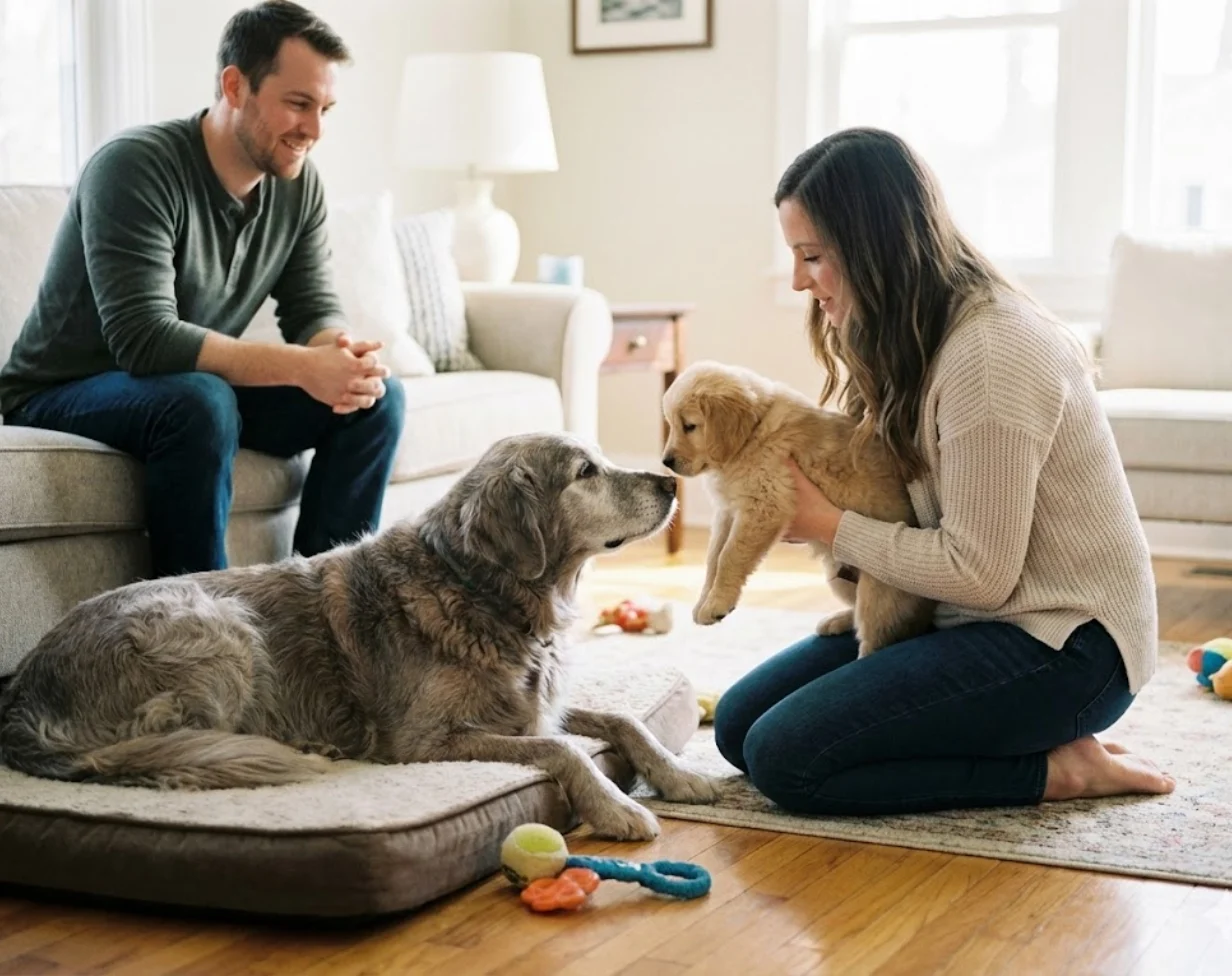
Bringing a new puppy home is exciting, but it can make your older dog feel stressed. Many Indian pet parents worry about how to introduce dogs to each other.
Dog owners also search for dog introduction tips to better understand puppy and senior dog relationships, to avoid conflict when a new puppy and an older dog meet.
Dogs are social animals. But they are also deeply routine-oriented. A poorly managed meeting between two strangers can be damaging if not handled properly.
This blog discusses how to introduce a new puppy to an older dog safely. It also sheds light on this topic, using veterinary behavior science, practical steps, and Indian home setups.
Introducing a New Puppy to an Older Dog Needs Planning
Introducing a puppy to a resident dog matters for a happy gesture. Older dogs value familiar spaces, predictable routines, and quiet rest time in their own space. Puppies bring the opposite. It can result in noise, constant movement, and poor social boundaries.
According to veterinary behavior guidelines, stress strongly impacts long-term tolerance between dogs during first exposure.
How Do You Introduce a New Puppy to an Older Dog?
Once pet parents are ready for this introduction, they should decide the meeting destination first.
Start with a neutral first meeting
The best way to introduce a puppy to an older dog is outside your dogs’ personal space. Choose outside space, not inside the home.
Neutral territory matters because homes trigger territorial instincts. Older dogs feel ownership of space, but puppies don’t understand social limits. So, try these methods.
- Allow brief sniffing only if both dogs remain relaxed
- Choose a quiet outdoor area
- Keep both dogs on loose leads
- Walk parallel, not face-to-face
Pet owners, avoid forced greetings. Dogs assess each other best side-by-side.
Puppy and Older Dog First Meeting: What to Observe
Get ready for the first meeting and check some healthy and warning signs of introduction.
Signs of a healthy introduction
These behaviors show that dogs are calm, relaxed, and feeling comfortable.
- Sniff → disengage
- Looking away naturally
- Relaxed body posture
- Neutral tail position
Warning signs you should not ignore
- Freezing or stiff posture
- Hard staring
- Lip lifting or growling
- Puppy ignoring warning signals
Growling is communication, not aggression. Punishing it increases bite risk.
Introducing Puppy to Resident Dog Inside the Home
Now, bring the puppy inside the home and get ready for the first introduction.
Manage space before expecting friendship
In Indian homes where space is limited, management matters more than training. Set up the home before the puppy arrives, ensuring these activities are completed.
Check out our complete New Puppy Checklist to set up your home for success.
- No shared toys or beds initially
- The older dog has free access to the rooms
- Puppy stays in crate or playpen
- Separate feeding areas
These activities prevent resource guarding It is also a common cause of dog conflict.
Will My Older Dog Accept a New Puppy?
In most cases, yes. This acceptance does not always mean play or affection. From a behavioral standpoint, calm tolerance from a senior dog is equal to success. If the presence of the new puppy is ignored, it is a healthy sign. If they play, it seems optional. Many senior dogs hardly play with puppies. It is a normal behavior. Note that forcing interaction creates resentment.
What If My Older Dog Doesn’t Like the Puppy?
This is one of the most common situations that pet owners need to deal with seriously.
Often overlooked medical reasons
The following health issues may cause older dogs’ negative reaction to a puppy:
- Arthritis or joint pain
- Dental disease
- General age-related discomfort
- Vision or hearing loss
Pain reduces tolerance. If senior dogs show irritability, it should be medically evaluated.
Puppy and Senior Dog Relationship
Pet owners need to manage energy mismatch because puppies explore with jumping, mouthing, and pawing. But senior dogs value rest and personal space. Don’t allow a puppy to bite the ear and tail of the senior dog. Stop the puppy from climbing and jumping over the resting older dog. Don’t force your big dog to show manners.
How Long Does It Take for Dogs to Get Used to Each Other?
There is no fixed timeline. The timeline is influenced by breed type, age gap, past experiences, and handling quality.
Typical adjustment phases
- 1–2 months for predictable routines.
- 2–3 weeks for reduced tension.
- 3–6 months for a stable relationship.
How to Stop Jealousy Between Dogs
Jealousy is not dominance. It is fear of losing resources. Stick to the following evidence-based strategies:
- Feed the older dog first.
- Give treats to the older dog when the puppy is present.
- Greet the older dog first.
- Protect senior dog’s resting areas.
This builds a positive emotional association instead of competition. If you aren’t sure what treats are safe for the new baby, read our guide on Healthy Treats for Puppies Under 3 Months.
Using Treats and Positive Reinforcement Correctly
Use some treats to shape emotions. It is not about obedience alone.
Correct Use of Treats
- Reward before tension escalates
- Reward calm coexistence
- Treat older dogs for ignoring puppies
- Use small, high-value treats
What to Avoid
- Feeding from the same hand
- Incorrect treat timing can increase conflict.
- Treating during growling
- Using food to force proximity
According to global behavior guidelines, don’t force senior dogs to bond through scolding. Don’t ignore senior dog emotions. If tension between the dog and puppy continues, intervene instantly or immediately look for vet guidance.
Conclusion
Introducing a new puppy to an older dog is not about emotional bonding, but forcing friendship. Dog owners need to protect senior dogs’ dignity, guide their puppy’s learning, and use treats strategically. Stick to the above dog introduction tips for a successful introduction.
With time and patience, they will become family. And when it’s time to celebrate their bonding, Cute Pet Bakery provides a wide selection of safe, customized cakes for dogs to make the day special.