

 +91-9818758771
 Login
Login

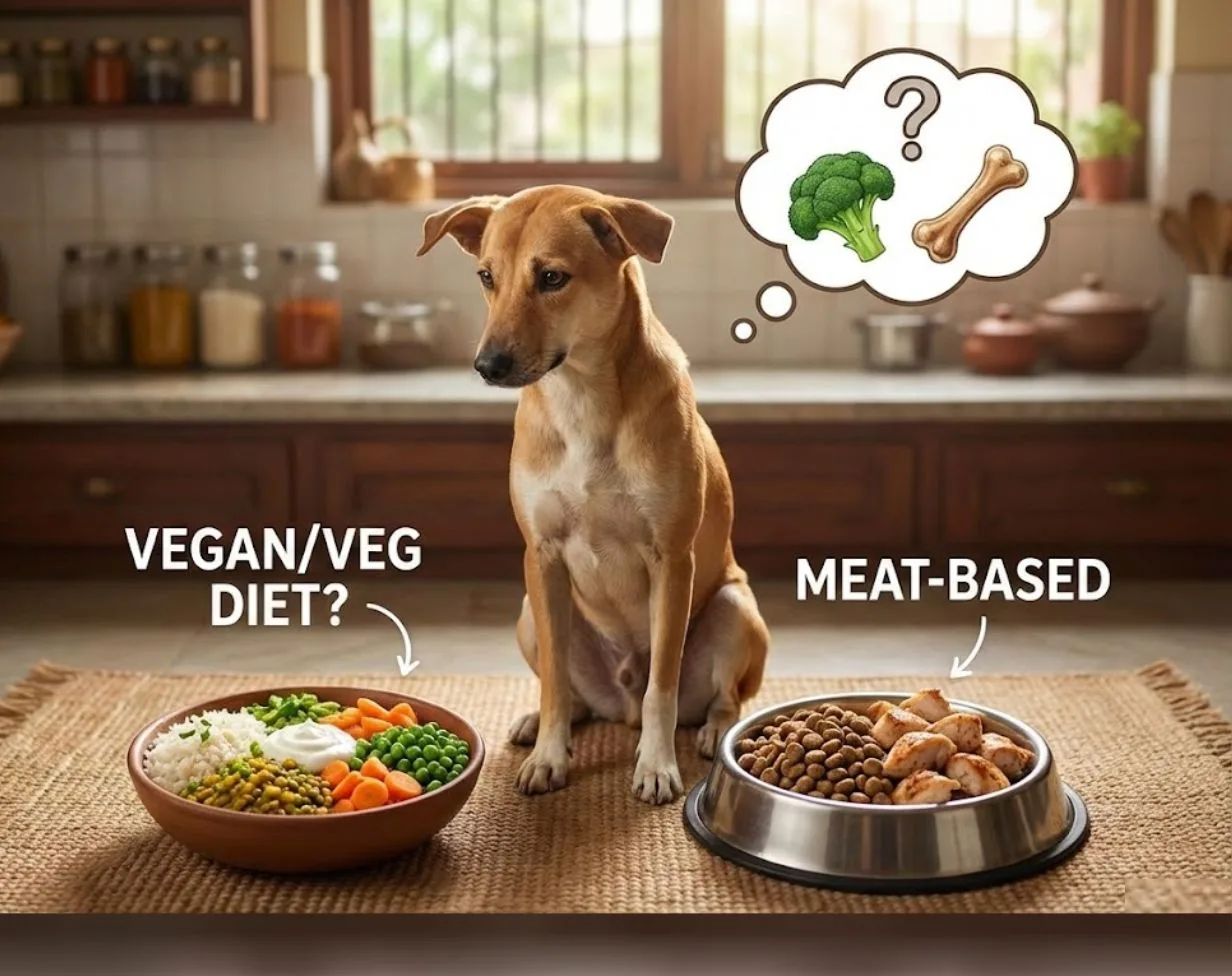
Many Indian pet parents look at vegan diets for dogs suspiciously in households where meat is strictly avoided.
With the rise of plant-based dog food and vegan claims online, pet owners still feel confused. Is a vegan diet safe for dogs?
This question should be answered based on food biology, nutrition, and health, not belief.
This content addresses common misconceptions about dog diets, specifically vegan diets, for domestic pets in India. It also helps pet parents make informed decisions on vegan food for dogs.
Vegan Diet for Dogs in India
Vegan food is a dog diet made entirely from plant-based ingredients to meet basic nutritional needs.
It excludes meat products and instead relies on human foods safe for dogs like rice, oats, lentils, and chickpeas. It also has added vitamin and mineral supplements.
Biologically, there is no such thing as a ‘vegetarian dog’. It means dogs can eat vegetarian food.
Dogs are carnivorous by nature. But they can digest some plant foods and rely on animal-based nutrients. A dog eats vegetarian food due to human choices, not natural preference.
In India, the term “vegetarian dogs” refers to dogs raised on milk and rice. But veg diets can have some risks associated with prime nutrients.
Vegan diets can be risky if not designed by a veterinary nutritionist.
Is a vegan diet safe for dogs?
A vegan diet for dogs is not fundamentally toxic. It can be nutritionally risky if not precisely formulated.
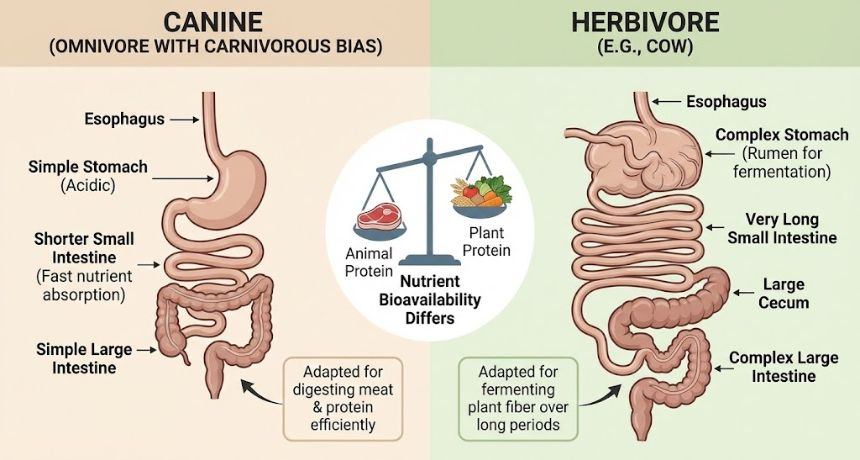
Dogs have a meat-adapted physiology, but they are classified as omnivorous. Dogs absorb certain nutrients from animal sources, not from plants.
According to NRC and AAFCO pet nutrient profiles, dogs require complete amino acids, vitamins B12 and D3, and iron and zinc.
Are dogs vegetarian or omnivorous?
Dogs are omnivores with a carnivorous bias. Cats are inborn carnivores. Canines can digest carbohydrates and plants. Dogs’ digestive enzymes and teeth easily absorb animal protein.
According to the Merck Veterinary Manual on Dog Nutrition, animal protein quality matters more than plant protein.
Can dogs survive on a vegan diet?
Yes, they can survive if the diet is planned properly. Dogs on poorly planned vegan diets may show signs of a dull coat and excessive shedding. They may experience muscle loss, low energy, and poor immunity.
Why do some dog owners choose vegan diets?
They prefer a vegan diet due to their ethical concerns, vegan lifestyle, and marketing claims that plant-based is healthier. Veterinary associations urge pet owners not to override a pet’s biological needs.
Vegan Food for Dogs: Common Myths Explained
Many myths stop dog owners from using vegan food for their pets. Let’s check some of the most common ones.
Myth 1: Dogs are naturally vegetarian in India
Fact: Dogs are not natural vegetarians. They are biological omnivores with carnivorous adaptations.
Indian street dogs eat everything they get freely, from meat scraps to dairy to insects. Their physiology has been designed to process animal protein.
According to the WSAVA Global Nutrition Guidelines, canine biology doesn’t change due to cultural feeding practices.
Myth 2: A vegan diet is healthier because it’s “clean.”
Fact: Clean is a human wellness concept. It is not approved by vets. Vegan diets don’t have the essential nutrients naturally present in animal foods.
These include vitamins, iron, carnitine, and arachidonic acid. Health depends on nutrient balance, but adding nutrients synthetically can be risky.
Myth 3: If a dog survives on vegan food, it must be safe
Fact: Survival and optimal health are not the same. Nutrient deficiencies may take time to show. Several long-term studies reveal diet-associated health risks from inappropriately formulated plant-based diets.
Myth 4: Dogs don’t need meat if protein levels are met
Fact: Protein quality matters more than protein ratio. Dogs can’t digest all plant proteins. But they can digest animal proteins naturally due to their amino acid profiles. You can’t match protein numbers with nutritional adequacy alone.
Myth 5: Vegetarian or vegan diets prevent allergies in dogs
Fact: Food allergies are rare in dogs, concerning specific proteins. Deliberate avoidance of meat from the pet’s diet can lead to deficiencies. Veterinary elimination diets are medical tools, not a clear lifestyle choice.
Myth 6: Homemade vegan diets are safer than commercial meat food
Fact: Most homemade vegan dog diets lack nutrients. They may be deficient in terms of fatty acids and calcium-phosphorus balance.
Commercial foods are far safer than unbalanced home diets because they are formulated to food safety standards.
Vegetarian Diet for Dogs in India: Reality vs. Needs
Most dogs consume home diets and tolerate them in India. But regular Indian vegetarian diets lack vitamin B12, proteins, and omega-3 fatty acids.
Pet parents can improve protein in the diet by adding curd or paneer. But dairy alone cannot replace meat nutrients.
Some veterinary institutions warn against the use of home vegetarian diets for growing dogs.
Do dogs need meat to survive?
Yes. Dogs need better meat nutrients from animal-based ingredients than from plants.
Is vegetarian food safe for dogs in India?
Yes. It is safe to some extent. It works well if it is approved by a veterinary nutritionist.
Where do pet cakes fit into this debate?
Pet cakes are occasional treats. Vegetarian cakes are fine if they have better portion control. If you are unsure which option is best for your pet’s big day, check out our comparison of Meat vs. Veggie Dog Cake Flavors to make the right choice. Vegan cakes are acceptable for celebrations.

Conclusion
A vegan diet is biologically unnatural for dogs. It is good for occasional treats if it has planned nutrients. It is good to respect cultural habits, but your pet’s health matters the most.