
 +91-9818758771
 Login
Login

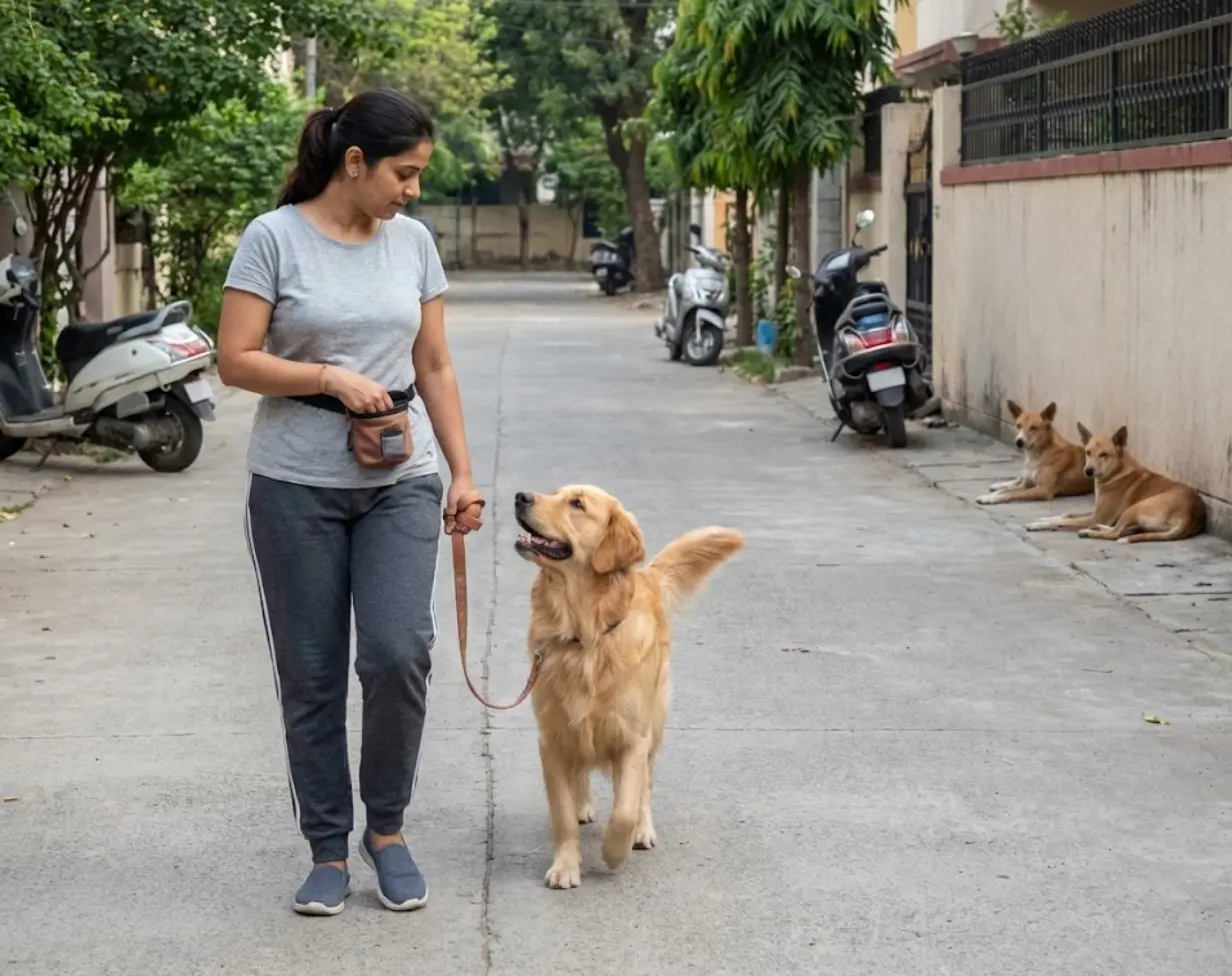
Walking a pet dog in India often means sharing space with street dogs. It is common to see a pet dog barking at street dogs and becoming aggressive on walks in India.
Many pet parents worry about their dog’s behavior around street dogs—lunging, freezing, and sudden aggression. These common reactions are stressful, but they are not signs of a “bad dog.”
Such signs show fear, confusion, and a lack of social learning in pets. This content discusses how to train your dog to behave around street dogs safely. Also, read some veterinary behavior principles that work in Indian conditions.
Why Do Dogs React to Street Dogs?
Pet dogs and street dogs live very different lives. They don’t share the same living spaces. The only common thing between the two is that they speak the same canine language.
Domestic dogs react to unfamiliar body language, direct staring, and threats from the free movement of stray dogs. They bark due to fear, frustration, and lack of controlled exposure.
Key behavioral reasons
The prime reason behind the sudden, abrupt behavior of domestic canines is that street dogs move freely and confidently and communicate through body language, not leashes.
Pet dogs frequently feel restricted and trapped. Street dogs often stare or approach directly; it makes pets feel pressured.
Leash frustration and fear are the top causes of dog aggressive behavior on walks in India, not dominance.
Dog Behavior Around Street Dogs
When it comes to understanding their pets’ aggressive behavior against stray dogs, pet parents need to know what is normal and what is not. It is important to know that not every reaction is aggression.
| Behavior | Is it Normal? | What it Means |
|---|---|---|
| Brief Barking | Yes | I see something new. |
| Watching Quietly | Yes | Assessing the situation |
| Freezing/Staring | Warning | feeling threatened/pressured |
| Lunging/Growling | Concerning | need space (Fear/Aggression) |
| Redirecting (Biting Leash) | Concerning | High frustration or panic |
Repeated uncontrolled reactions in pets support the habit neurologically.
How to Walk Your Dog Safely Around Street Dogs
There are some walk management rules that can help your dog feel comfortable when they walk in a space that is also shared by other street dogs. But safety comes before training.
Walk management rules
- Avoid narrow lanes during peak street dog activity.
- Keep the leash short but loose.
- Tight leashes increase defensive reactions.
- Use a well-fitted harness, not a choke chain.
- Walk during low-traffic hours (early morning).
check our guide on Must-Have Dog Accessories.
Training a Dog Around Street Dogs Starts at a Distance
Dogs learn when they feel safe. This is why dog training must begin in a specific space where pets feel calm and responsive.
Training pets around street dogs may overwhelm the dog’s brain. It may reinforce reactive behavior in pets instead of reducing it. It also means you cannot train calmness at close range.
The Safe Distance Rule for Training
Every dog has a reaction threshold. It is called the distance at which they stop thinking and start reacting.
Training rule: If your dog can still eat treats and respond to their name, it clearly indicates that you are at a safe training distance.
How to Stop Dog Barking at Street Dogs
Dog parents need to understand that barking is communication, not disobedience. So, identify triggers early. Just manage your pets’ instant response and reward them for their calm behavior.
Also, increase the distance before barking starts. This trains the dog to connect with street dogs safely in place of fear.
Step-by-step behavior method
First, spot street dogs before your dog reacts. Then, mark calm behavior (“Yes” or click). Reward your pet with a high-value treat immediately.
Walk away calmly. This is called counter-conditioning, changing emotional response, not suppressing behavior.
Socializing Dogs with Street Dogs
Socialization does not mean allowing interaction. But it matters most for communication between domestic and street dogs.
Correct definition of socialization
Socialization means learning to stay calm in the presence of other dogs. It is not about needing to greet or engage. It also means feeling safe without reacting. Street dogs are not training tools. Forced greetings can escalate conflict.
What to Do If Street Dogs Approach During Walks
This is a real concern for Indian pet parents. Check how your domestic pet reacts in the presence of street dogs.
Immediate safety steps
- Stay calm and stop moving.
- Place your dog behind you.
- Avoid staring at street dogs.
- Use a firm, low voice.
Do not pick up your dog; it increases chase behavior.
How to Keep a Dog Calm on Walks in India
Calmness is trained before the walk. It makes your pet behave gently and prepares dogs mentally.
Mental fatigue reduces reactivity more than physical exhaustion.
At-home training that makes walks easier
- Build impulse control through food puzzles.
- Practice loose-leash walking indoors.
- Reward eye contact and teach the “watch me” cue.
Punishment makes street dogs react badly. When punishment is paired with street dogs, your dog reacts aggressively and increases anxiety. This creates long-term aggression
If pet owners detect any sign of aggression in pets while walking, they should consult a vet or behaviorist. Signs of aggression include reactions to escalation, dogs redirecting aggression to handlers, and fear persistence.
Conclusion
Pet dogs and street dogs are not the enemy. They are part of India’s ecosystem. Fear, restraint, and unfamiliar social rules shape your dog’s reaction. Just train your dog, reward calmness, and manage walks wisely.
If you are starting early, read our Dog Care Tips for New Pet Parents to build confidence from day one.