
 +91-9818758771
 Login
Login

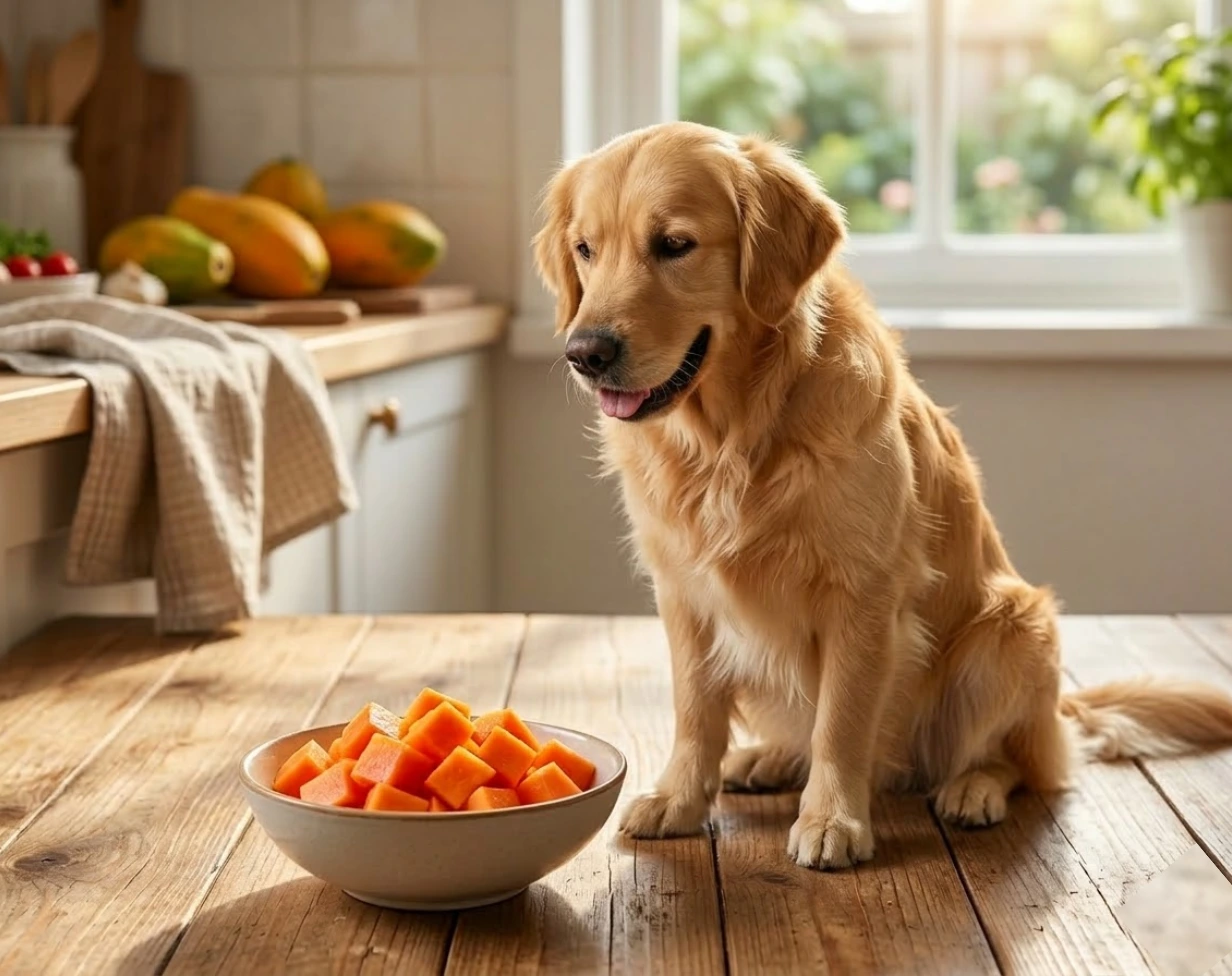
Dog owners wonder if their pets can enjoy papaya like them. Can dogs eat papaya? If you are wondering about the risks and benefits of sharing this tropical fruit with your furry friend, you aren’t alone.
The answer is, yes, dogs can safely eat ripe papaya in moderation. Papaya for dogs is healthy, but in moderation when served as per the safe feeding guide.
The orange flesh of papaya comes with healthy vitamins and enzymes. But its skin and seeds can be risky for pets.
This blog discusses the nutritional benefits of papain and the risks associated with dried papaya. It also shares how you can feed your canine companion safely.
Is Papaya Safe for Dogs?
Generally, ripe papaya is a safe treat. Moreover, it is non-toxic for dogs. Papaya offers many nutrients that complete a dog’s diet.
It is not toxic like grapes and raisins. However, safety depends entirely on preparation.
Don’t give a whole papaya to the dog. Peel it well and deseed it before cutting it into bite-sized pieces. Small pieces avoid choking and intestinal blockages in pets.
According to veterinary experts at PetMD, never introduce a fruit treat to pets that exceeds 10% of a dog’s daily caloric intake.
Nutritional Profile of Papaya
Papaya is a strong source of vital vitamins and minerals. These include:
- Folate for RBC production and metabolic processes
- Magnesium for muscle health and energy production
- Potassium for heart and kidney function.
- Vitamin A for immunity, vision, and skin health.
- Vitamin C for inflammation control.
Major Benefits of Papaya for Dogs
Papaya consumption gives pets lots of health benefits.
1. Papain for Natural Digestive Support
Papain is a natural enzyme that helps in the processing of proteins. This unique benefit offers natural digestive support.
A small amount of papaya can help pets recover fast from mild indigestion or gas. This is why many high-quality supplements include papain as a primary component.
2. Rich in Antioxidants
Papaya contains flavonoids and beta-carotene antioxidants that naturally neutralize “free radicals” in the body.
Ultimately, antioxidants slow down cellular damage. These compounds help senior pets support their immune system and maintain cognitive function.
3. High Fiber Content
Fiber naturally maintains regular bowel movements. Fiber in papaya means high water content, which naturally offers comfort to dogs who experience mild constipation. Add more moisture to your furry’s diet during the summer. Check out our post on other hydrating fruits for dogs.
4. Heart and Skin Health
The blend of potassium and vitamin A supports cardiovascular system health. It also supports a shiny coat. Vitamins in papaya are a natural booster for dogs with dry skin and dull fur.
The Hidden Dangers: Seeds, Skin, and Stems
Papaya’s flesh is a superfood, but other parts of the papaya can pose danger.
Are Papaya Seeds Toxic to Dogs?
There is a common myth that papaya seeds contain cyanide. While papaya seeds aren’t highly toxic, they contain compounds that can cause severe gastrointestinal distress and pose a dangerous choking or blockage hazard. Always remove them completely.
Why You Must Peel the Skin
The skin of a papaya is tough. It is fibrous and totally indigestible. If a dog swallows a large piece of the peel, it can get stuck in the intestines and cause a physical obstruction. This is why you should peel the fruit completely.
The Problem with Green Papaya
Raw green papaya is unripe, and it contains high levels of papaya latex. Raw fruit can be a severe gastric irritant for dogs.
Moreover, it can lead to vomiting or diarrhea. While feeding the dog green papaya, ensure it is fully boiled. It will be good to offer ripe papaya to pets.
Can Dogs Eat Dried Papaya?
Generally, dried papaya should be avoided. Fresh papaya is healthy, but dried papaya can be problematic:
- Concentrated Sugar: Dehydration removes water. It leaves behind a very high concentration of natural sugars. This can lead to rapid weight gain.
- Preservatives: Many commercial dried fruits contain sulfite preservatives. They maintain colors that can cause allergic reactions in sensitive dogs.
If you try commercial treats, buy specialized pet products only. For example, Cute Pet Bakery offers pet-safe products, ideally designed for dog safety. If your dog loves tropical flavors, you might also be wondering, can dogs eat mango?
Safe Feeding Guidelines by Dog Size
A portion control guide for papaya is vital to avoid stomach upset in pets. Papaya should be an occasional treat, not a daily treat.
| Dog Size | Weight Range | Recommended Serving |
|---|---|---|
| Extra Small | 2–10 lbs | ½ inch cube (mashed) |
| Small | 11–25 lbs | 1–2 small cubes |
| Medium | 26–50 lbs | 3–4 cubes |
| Large | 51–90 lbs | 5–6 cubes |
| Extra Large | 90+ lbs | Up to 1/4th cup of cubes |
Special Considerations: Diabetes and Allergies
Dogs with Diabetes
Papaya has a medium glycemic index (GI) of about 59. It has enough natural sugar that it can increase a diabetic dog’s insulin levels. It is advised to consult your vet before introducing papaya to a diabetic pet.
Allergic Reactions
Some dogs can be allergic to papaya. It is a rare possibility. If your dog is eating fruit for the first time, watch for:
- Difficulty breathing
- Itching or hives
- Sudden diarrhea
- Swelling of the face or paws
How to Prepare Papaya for Your Dog: Step-by-Step
Step 1: Choose Ripe Fruit: Ensure the papaya is fully ripe (orange and slightly soft). Avoid raw, green papaya.
Step 2: Peel the Skin: Completely remove the tough, fibrous outer skin.
Step 3: Scoop the Seeds: Scrape out all the black seeds from the center.
Step 4: Cut into Cubes: Chop the soft flesh into small, bite-sized cubes to prevent choking.
Step 5: Test a Small Amount: Offer just one piece first to ensure your dog doesn’t have an allergic reaction or stomach upset.
Conclusion
Seedless, ripe, and peeled papaya is a delicious snack if served correctly. Papaya flesh can support your dog’s immune system and digestion. Remember the 10% rule for better health outcomes.
If you are looking for a special way to celebrate your dog’s milestone, order a custom dog birthday cake from professional bakers, like Cute Pet Bakery.
FAQs
Yes. Fiber and papain-rich papaya help pets with constipation and regulate their digestive tract. See the AKC’s guide to fruits and vegetables for more on digestive health.
Yes, puppies can eat papaya, but in very small amounts. Puppies’ sensitive digestive systems can’t tolerate higher amounts of fiber.
If puppies eat papaya seeds, monitor them for diarrhea. Contact your vet ASAP if your pets consumed a large number of seeds.