
 +91-9818758771
 Login
Login

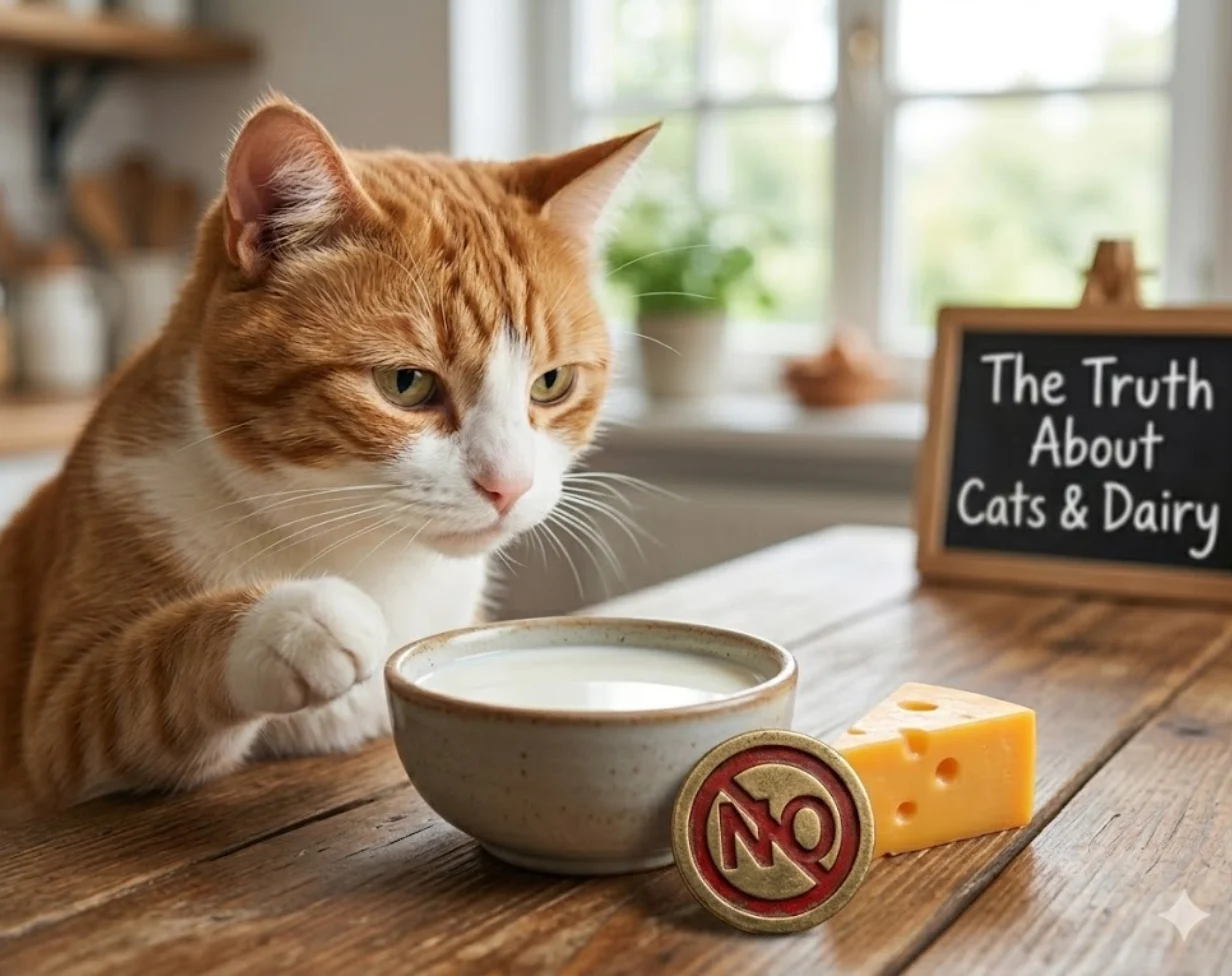
If you live in India, you must have certainly seen a cat happily drinking milk at home, in cartoons, in storybooks, etc.
The truth is that, most of the time, dairy products such as milk, curd, or cheese should not be given to cats.
Although it is not always harmful to feed them a tiny amount of dairy, frequent consumption can result in digestive issues and an unpleasant experience for your cat.
Why Do Cats Love Milk?
Cats prefer & like milk because:
- It’s rich in fat and protein
- It smells appealing
- Most cats are exposed to milk at an early age.
A kitten can digest its mother’s milk because it contains lactose and the enzyme needed to break it down. Problems start after the kitten is weaned.
Are Cats Lactose Intolerant?
Yes, the majority of adult cats are lactose intolerant.
As cats grow up, their bodies stop producing enough lactase, the enzyme needed to break down lactose (milk sugar).
When lactose isn’t digested properly, it ferments in the gut and causes problems.
The symptoms of lactose intolerance that are common in cats are:
- Loose stools or diarrhoea
- Vomiting
- Gas and bloating
- Stomach pain
- Lethargy after eating dairy
These symptoms may be visible within a few hours after feeding your cat milk or dairy products.
Can Cats Drink Milk?
Frequent consumption of cow milk is not suggested.
All kinds of toned, full cream, and skimmed cow milk contain lactose, and it can upset the stomach of your cat.
Even a small bowl with daily intake will lead to long-term problems with digestion. The milk of goats also has lactose.
There are certain cats that might be able to bear it a little; however, most cats find it uncomfortable.
Lactose-free cat milk is good for them as it is specially formulated to suit cats. In India, these products can be found in pet stores.
They must be fed in rare cases and as a snack, but not as a nutritional need. Water is the most appropriate drink for cats.
Can Cats Eat Curd or Yoghurt?
Curd is also used in Indian homes, and most pet parents wonder if it is safe.
Curd contains less lactose than milk, and some cats can tolerate such minimal levels. Nevertheless, not every cat can digest it.
If you want to try:
- Feed not more than half a teaspoon of plain unsweetened curd.
- Observe your cat for 24 hours
- Quinine should also be stopped in case of loose stools or vomiting.
- Do not feed your cat flavoured, sweetened, or salted curd.
Can Cats Eat Cheese?
Cheese or cat cakes with cheese are normally consumed as a snack or to feed cats their medicines hidden in it, but is it safe?
Cheese is not high in lactose as compared to milk; it contains fat and salt. The results of overfeeding cheese could be obesity, pancreatitis, or dehydration.
If you want to feed chees to your cat, then:
- Offer only tiny amounts
- Give it very occasionally
- Select the less intense ones, such as paneer or mozzarella.
- Avoid cheese slices, spicy cheese, and salted ones.
Is Dairy Ever Good for Cats?
Nutritionally, No. Dairy products are never the right choice for your cat nutritionally.
Cats are also obligate carnivores. They require nutrients derived through the consumption of animal protein, not dairy.
Milk does not give cats anything they can’t already get from:
- Quality cat food
- Meat-based treats
- Clean drinking water
Dairy is a human comfort food, not a feline desire.
Healthier Substitutes to Dairy Treats
Safer options include:
- No salt or no masala boiled chicken.
- Boiled boneless fish
- Commercial cat treats
- Occasional Lactose-free cat milk.
- Small portions of plain pumpkin puree are to be digested.
Must note how your cat is reacting to this kind of food to be aware of your pet’s health. Therefore, new food should always be introduced slowly to your cat.
You should monitor your cat properly. Take appropriate action if there is a change in digestion, presence of loose stools, vomiting, and Circassian drowsiness.
How to Treat a Cat that Eats Dairy Accidentally?
If it were a small amount:
- Observe your cat for 24 hours
- Ensure access to fresh water
- Avoid giving more dairy
Call your vet in case you notice:
- Persistent diarrhoea
- Repeated vomiting
- Extreme lethargy
- Signs of abdominal pain
So, What’s the Best Choice for Your Cat?
Milk is not as harmful as it may appear, but to the majority of cats, it can be a source of digestive issues.
Regular milk is best avoided, while curd and cheese should only be given in tiny amounts and very occasionally.
In case you feel like giving milk, you can select lactose-free milk, which is specifically made and use it as a special treat.
Clean water, meat-based products & a nutritionally balanced diet are the healthiest options for your cat.