
 +91-9818758771
 Login
Login

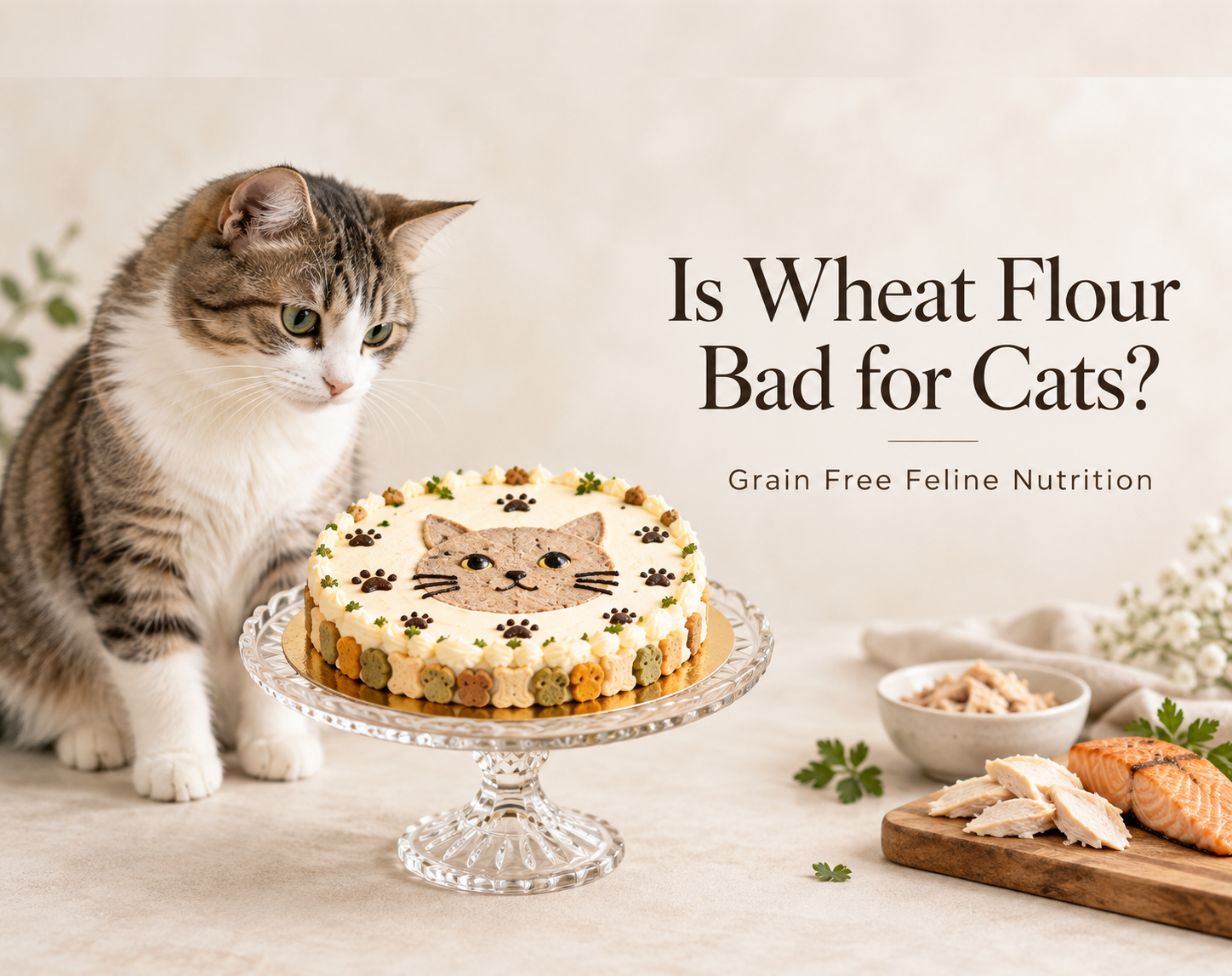
Cats are natural meat eaters, and they need meat as a source of protein to survive. Their highly specialized digestive systems can process nutrients from meat. Cats need no carbohydrates because they lack specific enzymes required to break down complex wheat flour efficiently. That is why they need obligate carnivore treats.
Although wheat flour is non-toxic to cats, it offers no nutritional value. In addition, your cat’s body processes meat-based nutrients biologically, not grains or carbohydrates. Feline nutrition demands arachidonic acid, taurine, and vitamin A. These nutrients are found in animal tissues naturally. Fats and proteins are the primary energy sources for cats.
Is wheat flour bad for cats? This guide answers this question with reference to feline digestion and nutrition.
Is Wheat Flour Bad for Cats?
A small amount of cooked wheat flour is least likely to harm most cats. Cats can use and digest nutrients from grains. But veterinary nutrition sources never consider grains nutritionally useless or inherently toxic. Note that a wheat flour-based cake offers no nutrition to cats.
Cats need animal-derived nutrients (vitamins and amino acids) as a part of their daily nutrition. Generally, cats’ diet should be low in carbs and moderate in fat. Plainly speaking, flour-based treats make no nutritional sense for cats.
Why Grain-Free Feline Nutrition Is Important
A grain-free treat focuses on animal protein, not wheat and other grains. A grain-free cat cake is useful for pet parents who need a pet-safe treat to meet feline nutritional needs. Grain-free is not synonymous with something healthier for cats. Cats need low dietary carbs because they are obligate carnivores biologically. Too many carbs can make your cat experience digestive upset, obesity, and diabetes.
When it comes to the cat food carbohydrate limit, there is no official nutritional carb limit for cats. Vet experts recommend 10-12% of their daily calories for cats from carbohydrates. Even replacing wheat with peas or potatoes does not make the overall food low-carb.
Maida Toxicity in Cats
Is maida toxic to cats? Cat owners search for the right answer to the question. The short answer is: no. Maida is refined wheat flour, which is not innately toxic to cats. But it doesn’t make a maida-heavy cake a good feline treat. Human cake ingredients are not appropriate for cats.
What should go into a meat-based cat cake?
A meat-based feline cake comes with cat-safe ingredients that cats can easily tolerate. Based on the cat-safe recipe, a cat cake can include:
- Cat-safe animal-based ingredients
- Cooked chicken and turkey
- Egg, fish, and animal proteins
Make the recipe simple and avoid human-style dishes. Don’t see a homemade cake treat as a replacement for balanced cat food. Homemade cat diets can be nutritionally deficient when they are not formulated correctly.
Does grain-free mean “low-carbohydrate”?
No. It is a misconception. Removing wheat from grain-free diets doesn’t automatically remove carbohydrates. Peas, potatoes, lentils, and tapioca can also contribute carbohydrates. Grain-free products can’t be better for blood sugar control and weight management.
For feline diabetes prevention, cat owners should get a prescribed diet from their vets. Such cats can get health benefits from moderately restricted carb diets. Remember that a grain-free cat cake means a meat-based cat treat.
Can wheat cause food allergies in cats?
Some cats can develop food allergies. All grain allergies don’t lead to skin and digestive problems. According to Cornell, food allergies can involve carbohydrate or protein molecules. So, exclude corn and wheat from a cat’s birthday treat.
If your cat experiences itching, vomiting, or diarrhoea after consuming a specific food, don’t switch to a grain-free diet instantly. Ask your vet if your cat’s food allergy is genuine or not.
Cats have different nutritional priorities. That is why feline nutrition is different from human baking. A feline birthday cake should be a special animal treat, avoiding sugar, flour, and other dairy products. So, keep carbs low in a meat-based recipe. While buying a commercial cat treat, check the ingredients and nutritional information.
Conclusion
The above-shared guide clearly explains why wheat flour is bad for cats. Cats are obligate carnivores, and their bodies need specific feline-based nutrition. Cats need a meat-rich and flour-free cake that can be a practical choice for pet parents who want a treat designed specifically for cats. Pet owners’ goal should be to put the right ingredients in the cake.
FAQs
No. Wheat flour is not fundamentally toxic to your feline friends. A flour-heavy cake offers no nutritional value to cats, as they are obligate carnivores and they have different nutritional needs.
Yes. Meat-based treats are better for obligate carnivores because they fit naturally with a cat’s nutritional biology. Cats need nutrients found in animal tissues.
Cats can try a small amount of cooked wheat flour. Note that maida offers no animal-derived nutrients for felines. It is not a prime ingredient in a cat’s diet.