

 +91-9818758771
 Login
Login

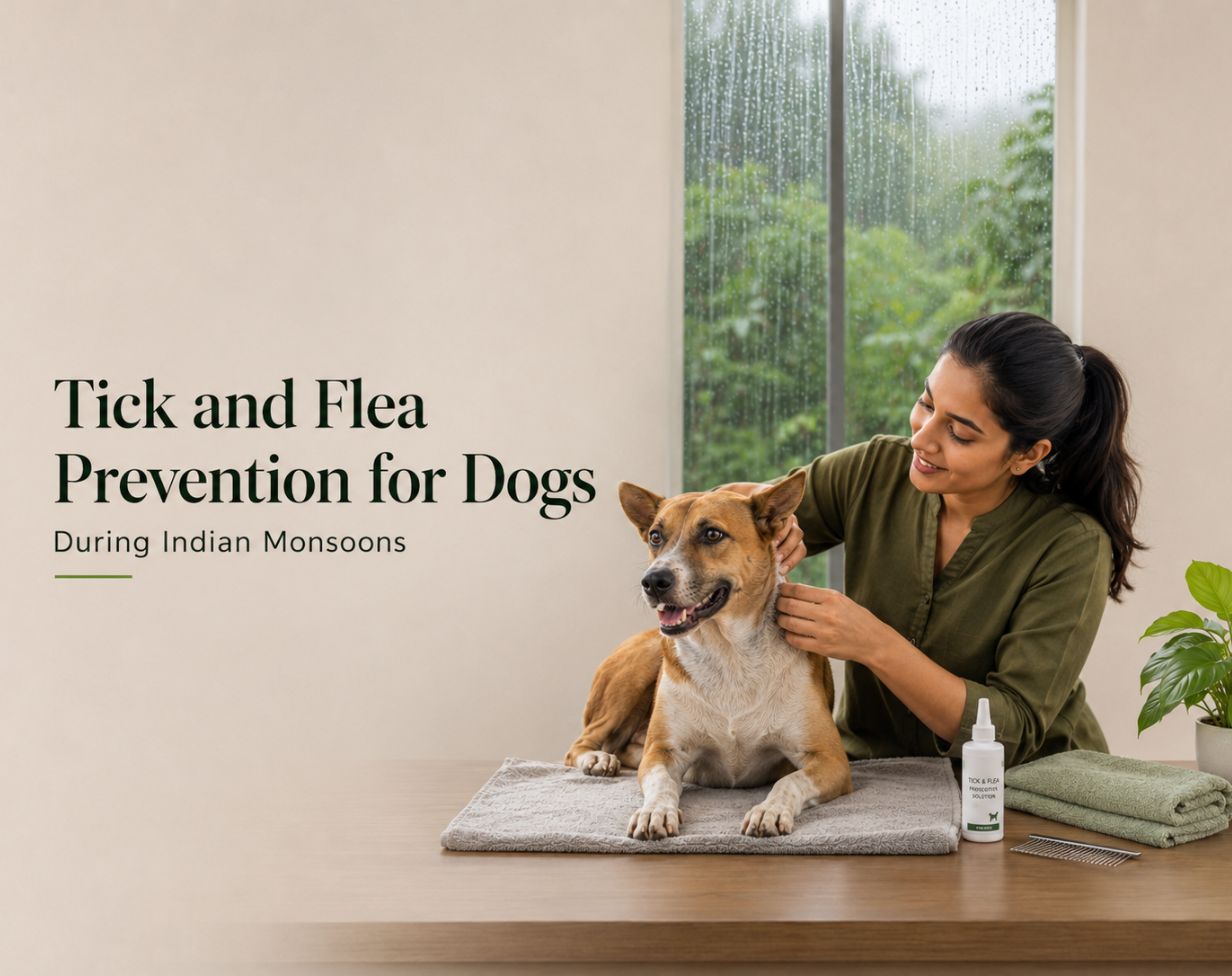
Indian monsoon weather creates a perfect environment that flea and tick parasites need to breed explosively and infest dogs and cats. Ticks reproduce faster in high humidity. They are found in grass and moist soil. Ticks and fleas can cause fever, dermatitis, itching, and anemia in pets. That is why tick and flea prevention for dogs during Indian monsoons matters for every dog owner.
When it comes to tick and flea prevention in the monsoon, opt for daily body checks, vet-approved products, and regular vacuuming. From medicated shampoos to oral preventives, this blog discusses monsoon dog care in India so that dog owners can keep their pet flea/tick-free.
Why Do Ticks and Fleas Increase During Monsoon in India?
Monsoon weather is the best time for India’s brown dog tick (Rhipicephalus sanguineus) and tiny jumping insect, the flea, to increase at an unprecedented pace. The rainy season supports parasite survival and reproduction. Parasites grow faster owing to the following reasons:
- Contaminated household areas
- High humidity and damp vegetation
- Outdoor walks in streets and parks
- Reduced sunlight and damp and dark areas
- Warm temperatures
- Wet ground and damp grass
The ideal parasite breeding temperature is 25-30°C. In a parasite-favorable season, your dog may encounter ticks during morning walks and visits to parks and gardens. Fleas may infest dogs through other pets, an infested environment, and clothing. Think of a preventive plan that is suitable for your dog’s breed, health status, and lifestyle.
Warning Signs Your Dog Has Ticks or Fleas
Ticks stick to dogs’ skin and feed on blood. They transmit viruses, bacteria, and parasites. Babesiosis and Ehrlichiosis are the two most common tick-borne diseases.
Babesiosis (Tick Fever): Transmitted by the brown dog tick, tick fever is the most common tick disease in India. It destroys red blood cells (RBCs), causing weakness, fever, swollen gums, and dark-colored urine.
Ehrlichiosis: It is another tick-transmitted infection. It affects platelets. With fever-like symptoms, it causes bleeding disorders and eye discharge.
Flea allergy dermatitis is common in dogs, as it affects a dog’s immune system. Flea bites can trigger full-body allergic reactions in sensitive dogs.
Dog Tick Fever Symptoms
Ticks can transmit diseases. That is why tick fever is not just an irritating skin problem. During monsoon, tick-borne infections can affect dogs badly. Check out the following symptoms:
- Bruising and unusual bleeding
- Dark or reddish urine
- Excessive scratching
- Head shaking and sudden fever
- Pale gums and loss of appetite
- Swollen lymph nodes and weight loss
- Unusual tiredness
- Dark specks in the fur
Flea Allergy Symptoms
Some dogs react intensively to flea saliva. Sensitive dogs can experience persistent itching when fleas bite. The following are some common flea allergy symptoms:
- Chewing at hindquarters
- Excessive licking
- Hair loss in patches
- Intense scratching
- Red skin and restlessness
- Reddish-brown specks in the coat
- Small scabs
Vet-Recommended Flea and Tick Prevention Methods
There is no single medical product that treats all tick and flea-induced diseases in dogs. The following are some major preventive categories:
Tick and Flea Tablets
Flea and tick tablets are oral preventives that dogs consume via their mouths. Many dogs find oral medications convenient. The following vet-recommended tablets wipe out fleas and ticks in the blood.
- Bravecto (chewy tablet)
- NexGard (chewable tablet)
- Simparica (chewy)
These tablets show fast action and eliminate 99% of parasites. They ensure long-term protection from infestations.
These tablets are the best for outdoor dogs, pets with severe infestation, and domesticated pets.
Topical Treatment Options
When it comes to easy, convenient, and spot-on treatments for dogs’ neck and skin, vets recommend the following tick killers:
- Advantage Spot-On
- Broadline for Cats
- Fipronil Spot-On
- Frontline Plus
These treatments kill fleas, ticks, and lice. Moreover, they prevent further infestations. These also work well for dogs with sensitive tummies.
Tick & Flea Collars for Continuous Protection
If you want instant and continuous protection against fleas and ticks, try Seresto Collar (water-resistant polymer collar) and Bolfo Collar (ectoparasitic collar).
Dogs around their necks wear tick/flea collars for specific durations, like 6-8 months. They are great for active cats and dogs. Designed with a continuous slow-release formula, these collars are suitable for multi-pet households and active dogs.
Tick & Flea Shampoos
Medicated shampoos are anti-tick shampoos that kill parasites immediately. They offer short-term residual prevention. Try out the following medicated shampoos known for their deep cleansing effects and killing ticks on the surface.
Try Cipla Protekt, Himalaya Erina EP, and Petben (benzyl benzoate). The best anti-tick shampoo products remove dirt buildup and soothe itchy skin. Overuse of shampoos can dry skin.
An anti-tick shampoo works well when your dog has external parasites. Shampoos offer short-term relief; they should not be taken as an entire prevention strategy.
Tick Sprays
Dog owners can apply Fipronil or Tick Free Herbal Spray on their pet’s skin and in the area where their pet lives. You can use these tick sprays on carpets, bedding, and the area where dogs used to roam freely.
Like sprays and shampoos, medicated powders also help your pets get freedom from fleas and ticks.
Preventing Ticks at Home
If you want to prevent ticks at home, you have to focus on places where your canine friend rests. Removing ticks from the dog will not be enough if you fail to stop the presence of parasites around the house. Check the following places for the presence of parasites.
- Balcony corners, blankets, and rugs
- Garden areas, cracks, and crevices
- Kennels, dog beds, and sofa corners
Wash washable bedding frequently. Use dry beds in pet sleeping areas. Clean dog carpets and furniture with a vacuum commonly.
Conclusion
The best tick and flea prevention for dogs during Indian monsoons is a routine, not a single shampoo. Use the flea and tick prevention methods shared above, recommended by vets, to reduce the risk of tick infestations in dogs. These are applied to pets’ skin, coat, collars, and environment. Also, serve your pets with dog treats from online pet stores and keep them healthy during the monsoon.
FAQs
The most effective way to prevent ticks during the monsoon is a multi-layered approach. Combine a vet-prescribed oral tablet or topical spot-on treatment with daily physical tick checks after walks.
No, anti-tick shampoo is not enough to prevent ticks long-term. Medicated shampoos only kill the adult parasites currently on the dog’s body and wash away, with no residual protection. Anti-tick shampoos offer temporary prevention from tick infestation. They should be used frequently for better protection from ticks.
The symptoms of tick fever in dogs include tick fever, weakness, and loss of appetite and weight. Also, check if your dog is experiencing pale gums, dark urine, or swollen lymph nodes.
Disclaimer: The information provided in this blog is for educational and informational purposes only; always consult your veterinarian for professional medical advice before starting any new tick and flea treatments or changing your pet’s diet.