
 +91-9818758771
 Login
Login

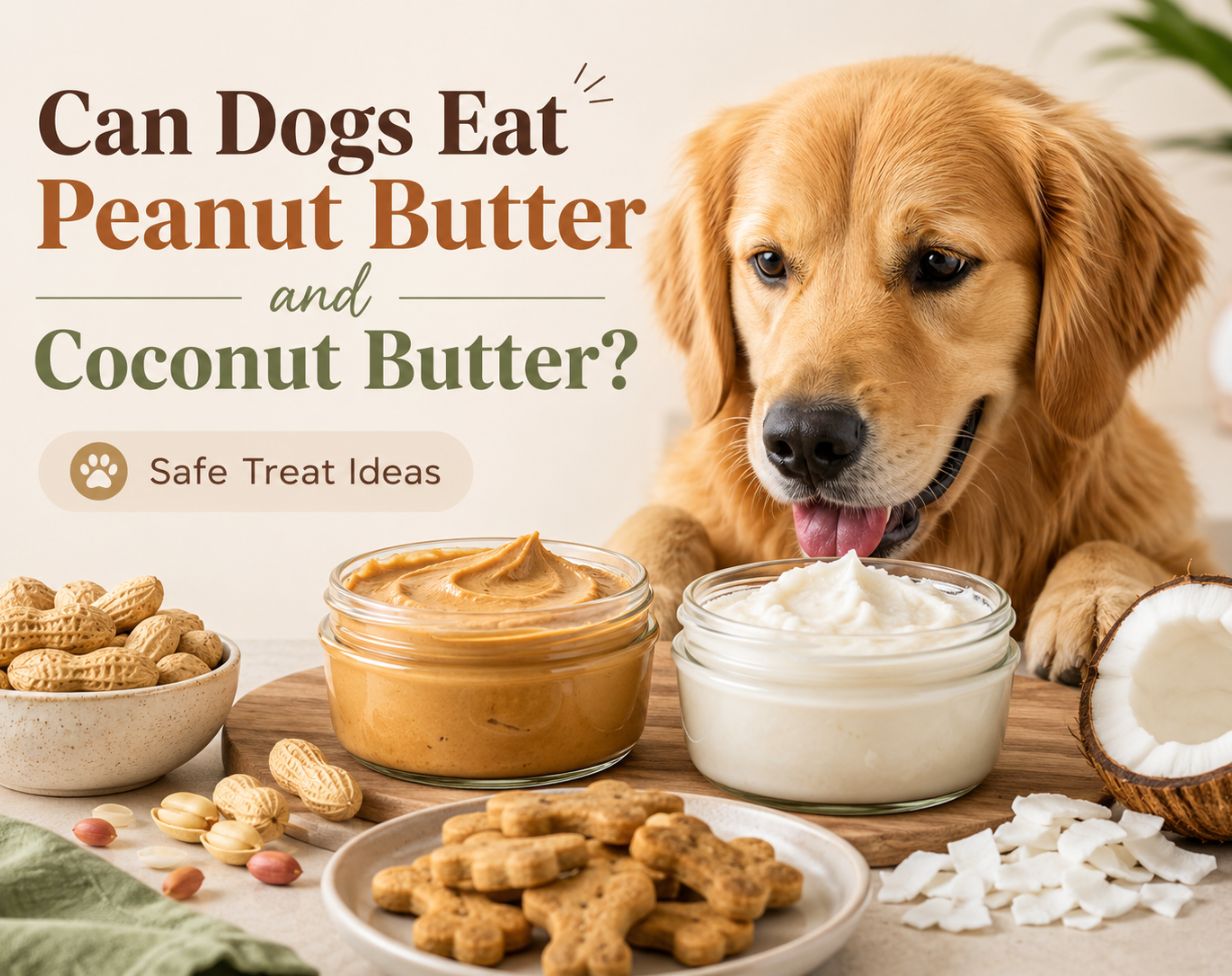
Can dogs eat coconut butter and peanut butter? Yes, healthy adult dogs can eat plain, 100% natural, and xylitol-free peanut butter and coconut butter in moderation. Rich in Medium-Chain Triglycerides (MCTs), coconut butter helps promote a shiny coat and boosts cognitive function. Peanut butter is a popular high-value training treat that carries heart-healthy fats, plant-based protein, and Vitamin E.
This blog discusses coconut butter vs. peanut butter for dogs, helping dog parents pick what is best for their canine companions.
Coconut Butter for Dogs
Many people assume coconut butter and coconut oil are the same. Both look the same, but they are different. Coconut butter is made from whole coconut flesh. It has a thick, creamy texture. It also contains fiber and natural fats. Coconut oil is made by extraction. It has virtually no fiber, but it has 100% fat.
Coconut butter contains oil and flesh. That is why it gives your cake a different texture. It is not safe for all dogs. Avoid coconut butter when your dog has a history of pancreatitis, obesity, and high blood-level fats. If your pet is on a vet-prescribed low-fat diet or experiencing chronic digestive issues, avoid it.
Can dogs eat coconut butter?
Yes. Plain coconut butter is safe for healthy dogs when it is free from chocolate, added sugar, and artificial sweeteners. Take it as an occasional treat because it is high in fat. It is not a daily snack.
Can Dogs Eat Peanut Butter?
Yes. Dogs can eat xylitol-free peanut butter. Dogs enjoy its taste, smell, and creamy texture. Peanut butter is highly valuable as a reward during training. The following are some of the main benefits of peanut butter for dogs.
- It contains healthy fats.
- It is a high-value training reward.
- It is easy to spread inside enrichment toys.
- It is rich in vitamin E and niacin.
- It offers plant-based protein.
Xylitol threat in peanut butter
Xylitol is a massive threat if it is used as a sweetener in your brand of peanut butter. Xylitol-sweetened peanut butter is highly toxic to dogs. Even the consumption of it in small amounts can cause a rapid drop in blood sugar. This situation is called hypoglycemia. It can also result in seizures and liver failure. Some of the common signs of xylitol poisoning include:
- Collapse and loss of coordination
- Seizures and tremors
- Vomiting and weakness
If you detect any of the above signs or suspect your dog has consumed xylitol, immediately contact your vet ASAP. If you are ordering a dog cake made from peanut butter, make sure you look for 100% peanuts. Strictly avoid xylitol (artificial sweetener), chocolate, and raisins.
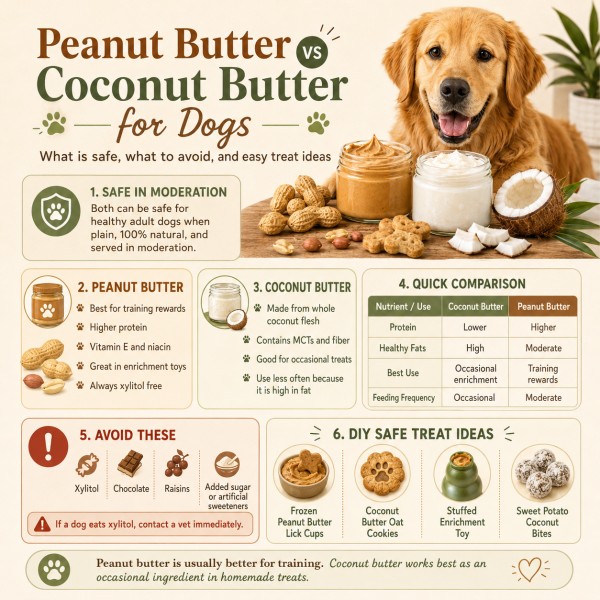
Coconut Butter vs. Peanut Butter for Dogs
| Feature | Coconut Butter | Peanut Butter |
|---|---|---|
| Protein | Lower | Higher |
| Healthy Fats | High | Moderate |
| Feeding Frequency | Occasional | Moderate |
| Calories | High | High |
| Fiber | Moderate | Very little |
| Best Use | Occasional enrichment | Training rewards |
Peanut butter is more practical for your pet’s training. Coconut butter can act as an occasional ingredient in homemade treats.
DIY Safe Treat Ideas with Coconut and Peanut Butter
You can also make a safe pet treat at home with the help of peanut or coconut butter. Below are some popular pet-safe treats you can make at home with specific ingredients. Every treat is made with high-quality ingredients.
- Frozen Peanut Butter Lick Cups: Mashed banana, plain Greek yogurt, and Xylitol-free peanut butter
- Coconut Butter Oat Cookies: Oat flour, eggs, coconut butter, and pumpkin puree
- Stuffed Enrichment Toy: Peanut butter, pumpkin puree, and small kibble pieces
- Sweet Potato Coconut Bites: Mashed sweet potato, oat flour, and a small amount of coconut butter
These ingredients are easily available in the market. You can use them accurately to make and bake bite-sized treats for occasional rewards.
Conclusion
For dog treats, peanut butter and coconut butter are safe options. They are good for making homemade dog treats. Peanut butter with a strong flavor and protein content is a better choice for training and enrichment. On the other hand, coconut butter works well in baked treats. But it should be used as an occasional ingredient.
Go through all ingredient labels carefully. Avoid cake products that have xylitol and chocolate as primary ingredients.
FAQs
No. Dogs can’t eat coconut butter daily due to the presence of fat content. That is why coconut butter should be offered to pets occasionally.
You can check the presence of xylitol in peanut butter by reading the ingredient list carefully. If you find xylitol listed as an ingredient, do not introduce it to the pet.
Generally, both butter types are healthier for dogs. Peanut butter with protein is suitable for training. Fat-rich coconut butter should be used infrequently.
Yes. Peanut butter is safe for dogs in moderation. In addition, the peanut butter should be totally free from xylitol. It is an artificial sweetener that is highly dangerous.