
 +91-9818758771
 Login
Login

Pets have more restricted feeding options than their owners. Dog owners think of cooking at home or buying a raw dog food diet.
This leads to a real query: raw vs. cooked dog food. It is all about selecting the right food type, ensuring nutritional balance, safety, and proper preparation.
Raw feeding advocates freshness, and cooked food for dogs seems easier to digest.
This blog compares raw food vs. cooked food for dogs, covering their benefits and risks, along with what vets say about each approach.
What Is a Raw Dog Food Diet?
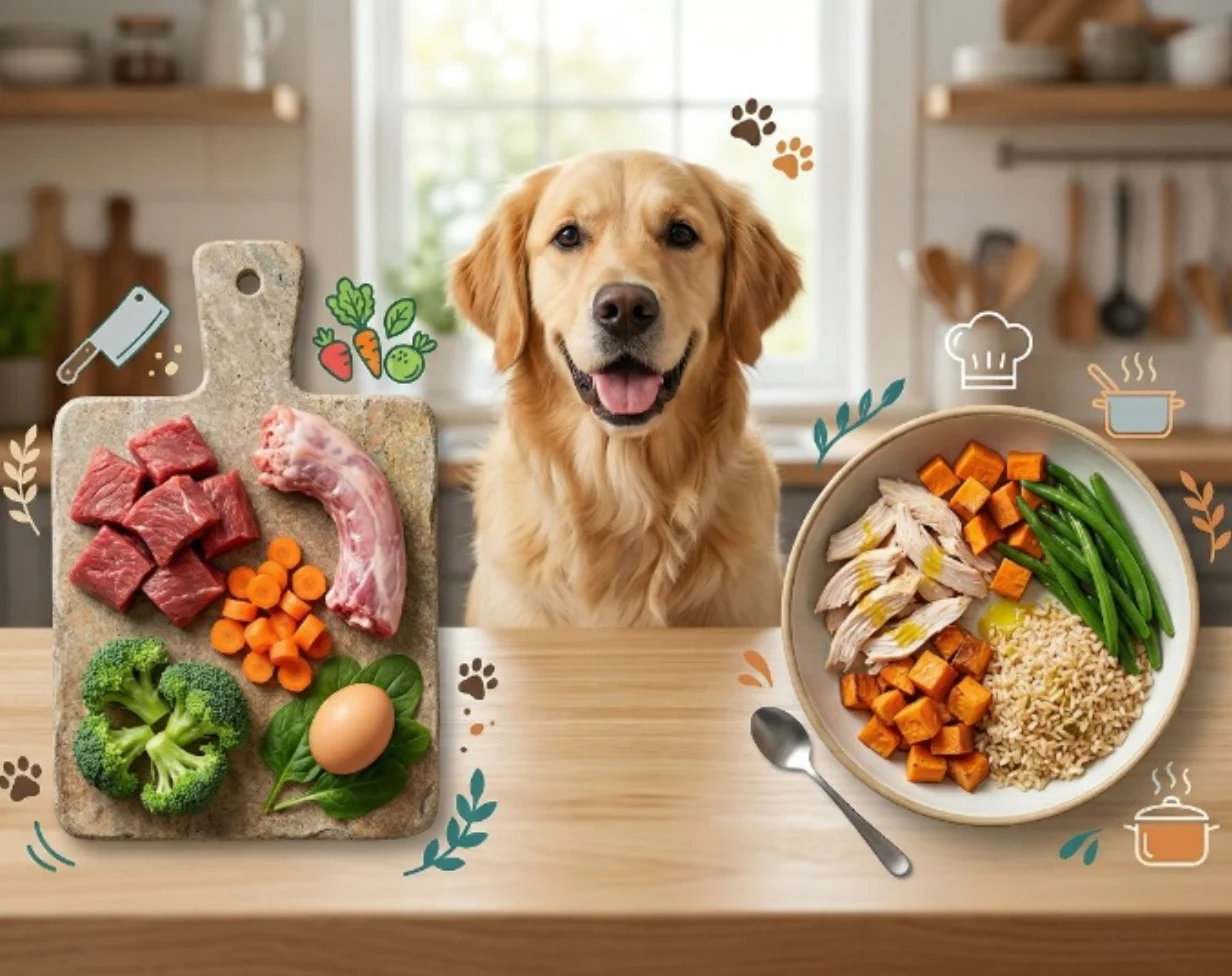
A raw dog food diet covers uncooked animal ingredients. These include eggs, organ meat, raw bones, raw meat, supplements, and vegetables.
A raw pet diet is also known as a prey model diet or Biologically Appropriate Raw Food (BARF). In the 1990s, raw feeding became popular to imitate the natural diet of wild canines and wolves with minimally processed food.
However, raw diets need careful planning to confirm that pets get balanced nutrients.
Benefits of Raw Dog Food
Firm supporters of raw feeding claim these advantages.
Fewer processed ingredients: Raw diets contain no high-heat or industrial processing. They may preserve certain nutrients naturally.
Potential dental benefits: Chewing raw meaty bones can improve dental hygiene and reduce plaque buildup on teeth. However, chewing bones also carries hazards of digestive injury or fractures.
Possible skin and coat improvements: Some owners experience shinier coats on their pets after switching to raw diets. It may happen owing to omega-3 fatty acids in certain raw ingredients.
Increased palatability: Dogs frequently find raw meat appealing, and they may respond better to raw food.
Risks of Raw Dog Food
Along with loads of benefits, raw diets come with a few concerns.
- Bacterial contamination: Raw meat contains E. coli, Listeria, and Salmonella bacteria that may infect dogs. Studies have found contamination of raw pet food with pathogens.
- Nutritional imbalance: Lack of calcium, certain vitamins, and iodine in formulated diets indicates nutrient imbalance. Homemade diets may lack essential nutrients.
- Bone hazards: Raw bones can cause choking, fractured teeth, and intestinal blockage.
- Parasite exposure: With Toxoplasma or Trichinella parasites, raw meat is risky until it is cooked normally.
What Is Cooked Dog Food?
Cooked food is an outcome of baking, boiling, or steaming ingredients, such as lean meats, vegetables, rice, or sweet potatoes. Cooking improves digestibility by killing harmful bacteria. Vets recommend cooked diets with correct levels of essential nutrients.
Benefits of Cooked Dog Food
Like raw diets, cooked diets also offer many advantages when prepared properly.
- Improved food safety: Cooking meat significantly lowers the risk of infections and reduces bacterial contamination. Proper cooking temperatures kill most harmful pathogens.
- Better digestibility: Cooking breaks down starch and protein to make digestion easy. This can help dogs with gastrointestinal disorders, recovering from illnesses, and sensitive stomachs.
- Easier portion control: Pet owners can monitor ingredients and portion sizes more precisely in cooked diets. It can be useful for dogs with certain medical conditions.
- Lower risk of parasites: Cooking destroys parasites in raw meat and reduces the risk of foodborne disease.
Challenges of Homemade Cooked Dog Food
While cooked diets are safer, they also have some potential drawbacks.
- Nutritional balance is difficult: Pet owners should have complete canine nutrition knowledge to create a balanced meal. Many homemade diets may lack the required nutrients unless they have added supplements.
- Time and preparation: Preparing fresh meals is time-consuming and needs food-preparation knowledge.
- Risk of Overcooking Nutrients: Certain vitamins are reduced while exposing them to high heat. So, balanced recipes matter here.
What Veterinary Experts Say
Vets issue warnings regarding the use of raw diets. The American Veterinary Medical Association states that raw animal-source protein may have bacterial contamination risks. The FDA also warns against the possibility of bacteria and parasites in raw diets.
Many certified vet nutritionists recommend balanced commercial diets and cooked diets for pets. A balanced cooked dog meal may include boiled chicken, cooked rice, a fish oil supplement, steamed carrots, and sweet potato. Also, opt for a vet-recommended mineral mix that minimizes bacterial risks.
Raw vs. Cooked Dog Food: Key Differences
Look at the factors of a dog’s health status, safety concerns, and vet guidance while choosing between raw vs. cooked dog food.
| Factor | Raw Diet | Cooked Diet |
|---|---|---|
| Safety | Higher contamination risk | Lower bacterial risk |
| Digestibility | Moderate | Often higher |
| Preparation | Less cooking, but careful sourcing | Requires cooking |
| Nutritional Balance | Often difficult without guidance | Also requires formulation |
| Parasite Risk | Higher | Lower |
FAQs
No, it is not due to possible bacterial risk.
Yes. Raw meat contains harmful bacteria that can infect dogs.
Yes. They do, but with caution, considering safety concerns and the nutritional risk.
Cooked or commercially formulated diets can be safer for puppies’ vulnerability to infections and developing immune systems.
Yes. It may be missing complete nutrition.
Do it gradually over 7–10 days to avoid digestive upset.
Major risks of dog food may relate to parasite imbalance, bacterial contamination, bone damage, and nutritional imbalance.
Customized cooked diets with limited ingredients can help dogs with allergies.
Conclusion
Raw vs. cooked dog food is about natural feeding vs. safety. Raw diets relate to fresh ingredients and the risk of bacterial contamination.
Cooked diets look ok, but they reduce food safety concerns. Simply focus on consistency, complete nutrition, and safe preparation.