
 +91-9818758771
 Login
Login

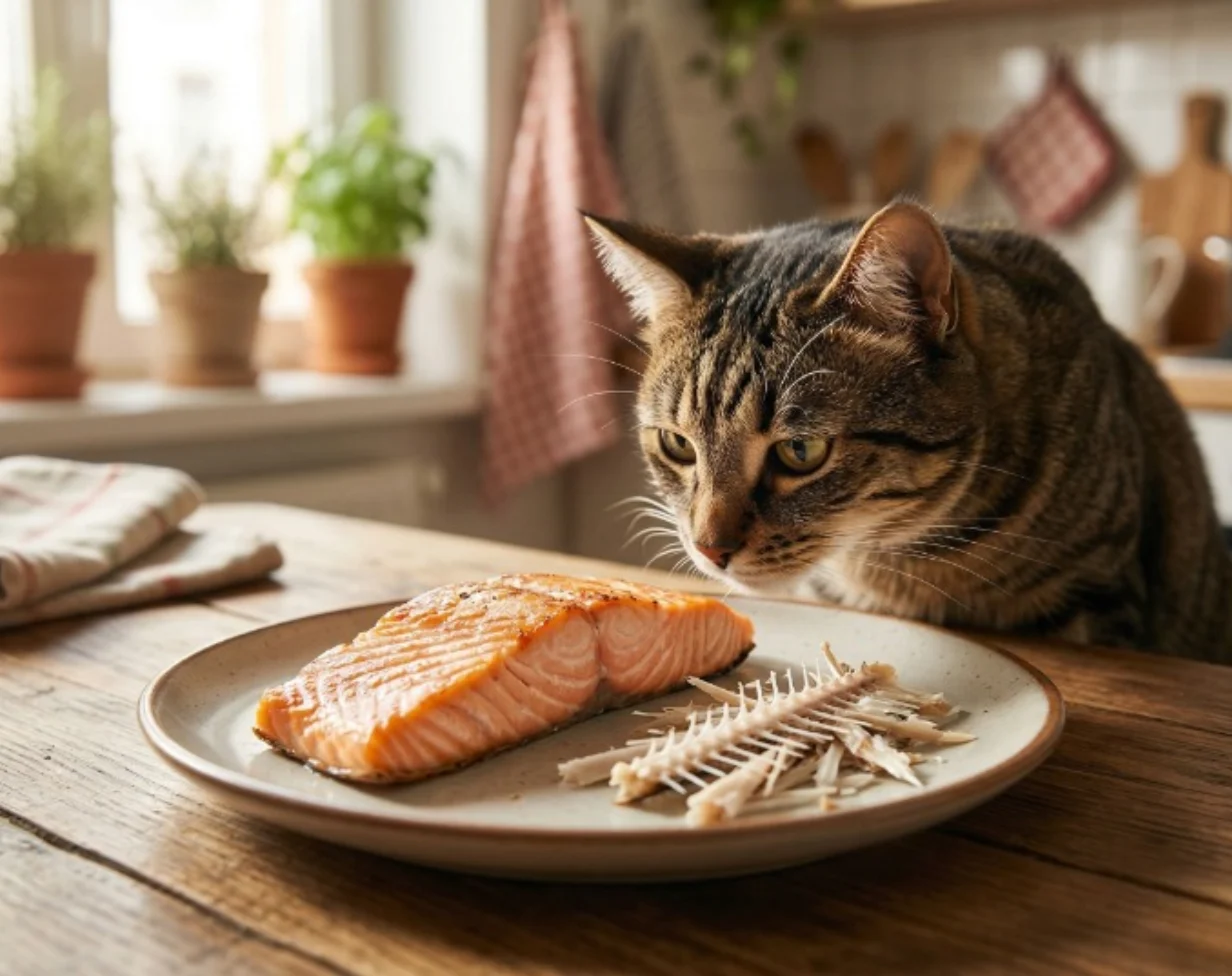
Most cat owners assume fish is safe for their feline companions. However, one concern causes confusion among cat owners: Is cooked fish with bones safe for cats?
A boneless, cooked fish is safe for cats in moderation. But fish bones present a real safety risk.
Sharp and brittle bones increase the chance of internal damage, choking, and mouth injury. Veterinary nutrition guidelines recommend bone-free fish for cats.
This blog answers the question: “Can cats eat cooked fish with bones?” It also talks about the risk of eating fish bones, safety tips, and expert recommendations on how to safely feed fish as part of a cat’s diet.
Is Cooked Fish Safe for Cats?
Yes. Cooked fish is commonly safe for cats when served correctly. Fish can offer beneficial nutrients such as high-quality protein, vitamin B12, omega-3 fatty acids, and selenium. These nutrients support
- immune function
- muscle maintenance
- skin health
However, vets suggest fish flesh, without bones, for cats. Offer boneless and fully cooked fish to cats occasionally.
Are Fish Bones Safe for Cats?
No. Fish bones are totally unsafe for cats. Most pet owners assume fish bones are soft enough for cats to chew safely. In fact, bones can cause various medical problems.
Can Kittens Eat Fish Bones?
No. Never introduce fish bones to kittens because of their delicate digestive systems and smaller airways. It may promote choking in pets. Even tiny bones can get stuck in the throat.
Key Reasons Fish Bones Are Dangerous
Fish bones become brittle when cooked. They can splinter easily. Their sharp edges can puncture tissues in pets and injure cats’ mouths and digestive tracts. It is said that foreign-body injuries can be caused by bones.
What Happens if a Cat Eats a Fish Bone?
If your cat swallows a fish bone accidentally, the following outcomes are likely, depending on the shape and size of the bone.
Mouth or Gum Injuries
Sharp bones can lodge between teeth or cut the inside of the mouth. Check these signs in pets, including
- Bleeding from gums
- Drooling and refusing food
- Pawing at the mouth
Bone Stuck in the Throat
Fish bones can stick in the esophagus or throat. Check these signs in pets.
- Distress while eating
- Gagging and coughing
- Repeated swallowing motions
Gastrointestinal Injury
If your cat swallows a sharp bone, they may puncture their digestive tract. Detect these potential complications.
- Internal bleeding
- Intestinal blockage
- Stomach irritation
Cooked Fish Bones for Cats vs. Raw Fish Bones
Some pet owners think raw fish bones are safer. Risks of eating bones include bacterial contamination, choking, and parasite exposure.
Cooked Bones
They are more dangerous because heat removes moisture. It makes cooked bones brittle. They can splinter into sharp fragments.
Raw Fish Bones
Raw bones are slightly softer. Even vets don’t recommend bones for cats.
Be it a raw or cooked fish, vets advise removing bones entirely, as they create and accumulate blockages. Fish bones can be a big concern for dental damage, esophageal injury, and digestive obstruction in cats.
Safe Ways to Feed Fish to Cats
Fish is a healthy and occasional treat. If you have decided to serve fish to your cats, make sure you stick to these suggestions.
Remove All Bones
Check for even small bones carefully. If possible, try to use boneless fillets only.
Cook Plain Fish
Serve cats only baked, boiled, and steamed fish. Don’t add garlic, onion, oil, salt, or spice to the fish, as they can be toxic to cats.
Offer Small Portions
Take fish as a supplementary treat only because large amounts may cause higher mercury exposure and nutritional imbalance.
Choose Safer Fish Types
Some fish have lower mercury levels and fewer bones. So, you can try cod, salmon, and boneless sardines. Don’t try tuna and canned fish at all.
If you detect coughing, difficulty swallowing, drooling, gagging, and loss of appetite in pets, it may be a sign that your cat ate fish bones and stuck them in its throat.
What Vets Recommend About Fish for Cats
Veterinary nutrition guidelines suggest pet owners not replace balanced cat food with fish. Just like the common misconception about milk, which we cover in our guide on can cats eat dairy, feeding your cat too much human food can create severe nutritional imbalances over time.
Cats’ bodies need arachidonic acid, taurine, and vitamin A nutrients. Commercial cat foods can offer these nutrients.
Remember that excessive fish feeding can create a nutritional imbalance over time.
FAQs
No, cooked fish bones are not safe, as they are sharp and brittle. They can damage your pet’s internal organs or cause choking.
Monitor your cat closely and check for any serious symptoms. From gagging to vomiting to drooling, symptoms can make pet owners contact a vet immediately.
No, raw bones are risky, even if they are softer. They can cause digestive and choking problems.
No, it is a rare scenario. Sharp bones can cause severe choking or puncture the digestive tract. If not treated in a timely manner, the situation can become life-threatening.
Yes, boiled fish without bones and spices is safe for cats when served in small portions.
Yes, kittens with smaller airways are more likely to choke on fish bones than adult cats.
Conclusion
Cats can eat plain, cooked, and boneless fish in smaller portions. Fish with bones is fatal for cats, even if it is a nutritious treat. Make your cat enjoy fish safely, avoiding all bone-related risks. If you want to celebrate your cat with a seafood-themed treat, order a custom cat-safe cake from Cute Pet Bakery.