
 +91-9818758771
 Login
Login

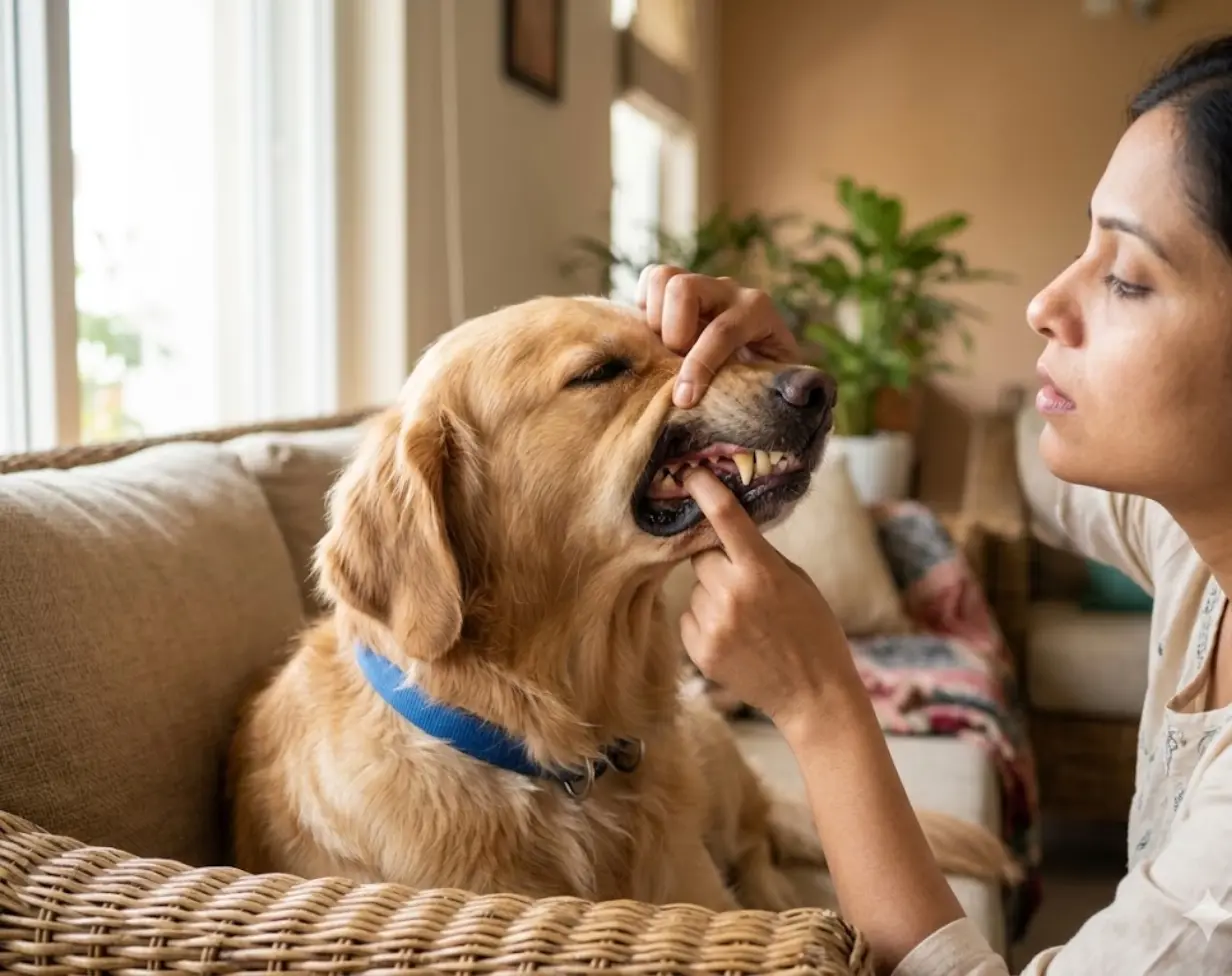
Many times when your dog’s breath smells bad, you might ignore it, thinking it’s just the “doggy breath”, but here’s one thing most of the pet parents don’t know.
Bad breath in dogs is not normal, and it is one of the initial signs that there might be something wrong with your pet’s dental health, certainly.
What is the Reason Behind Bad Breath in Dogs?
Occasional bad breath in dogs can be considered normal, but if it is consistent and getting worse, it can be a sign of dental disease symptoms in pets, including:
- Plaque and tartar accumulation
- Gum infections (gingivitis)
- Tooth decay or broken teeth
- Food stuck between teeth
- Advanced dental disease spreads bacteria into the bloodstream
Dental Disease Symptoms in Pets: Early Signs You Shouldn’t Ignore
There are many signs dogs show if they have any dental disease, including:
Strong, Unpleasant Breath
The first warning sign is the constant bad odour of your dog. This is observed by many pet parents months prior to other symptoms being noticed.
Yellow or Brown Teeth
Tartar that is visible, particularly around the gum line of your dog, is an indication of hardened plaque.
Red, Swollen, or Bleeding Gums
Healthy dog gums are pink. Suggestive of gum disease is redness, swelling or bleeding when chewing or brushing.
Difficulty in Eating or Dropping Food.
When your pet stops chewing properly or keeps dropping food, dental pain or discomfort can be the reason.
Over drooling or chewing of the mouth.
Excessive drooling or constant chewing can mean your pet is uncomfortable or in pain.
Behaviour Changes
Pets might become irritable, shy, or even excessively violent due to dental pain.
In pets, these symptoms of dental diseases usually develop slowly.
By the time your dog shows any signs of pain, it might be too late since the disease may be at an advanced stage.
Practical Tips for Pet Parents to Improve Their Pet Dental Health
You can follow these simple tips to enhance your pet’s dental health.
Maintaining oral hygiene is important for a pet’s overall wellness. If you are a new pet parent, read our post on guide on How to Take Care of Dogs.
Regular Brushing
- Use pet-friendly toothbrushes and toothpaste (no human toothpaste).
- Start with a small amount, let your pet lick the toothpaste first, then brush it.
Vet Check-ups
- Visit the dentist at least once a year.
- In extreme tartar buildup, professional dental cleaning may be needed.
Fresh Water Always
- Hydration also helps in removing food particles and bacteria.
Balanced Diet
- No sticky and sweet foods.
- Only feed kibble or home-cooked meals to your dog, as recommended by the vets, with crunchy textures.
Toys That Help
- Gums can be rubbed with rubber chew toys or rope toys that can help reduce plaque.
Dog Breeds More Prone to Dental Problems
Certain dog breeds are more likely to develop dental diseases due to their natural mouth structure.
Due to their size and shape, small and short-faced dog breeds usually have overcrowded teeth, which facilitates the increase in plaque accumulation.
Dog breeds that require additional dental attention are:
Shih Tzu, Pomeranian, Pug, Chihuahua: Small jaws that have tightly packed teeth.
Apso, Maltese, Spitz: They tend to get tartar more.
Flat-faced (brachycephalic) breeds: Bulldogs and Pugs also have higher chances of having dental problems.
As dogs of any breed age, their enamel weakens, making them more prone to dental issues.
For these older pups, brushing, vet visits, and texture-friendly treats or cakes that are appropriate for their gut can go a long way in maintaining their dental health.
How Vets Diagnose Dental Disease in Pets
The physical examination of the mouth is the initial step vets take to examine your pet’s dental health. But if the condition is serious, they can proceed with advanced methods like:
- Visual inspection of teeth and gums
- Checking for pain, swelling, or loose teeth
- Dental probing to assess gum health
- Dental X-rays to check below the gum line
If you take your dog early to the vets, it will allow vets to identify the problem early and treat it before it becomes uncomfortable for your dog.
Early vet check-ups can help your pet avoid all the possible pain and discomfort they get from dental diseases.
Note: Bad breath in dogs can lead to some serious dental diseases, and you must be alert if it is consistent.
Choosing the right treats, food, dog-safe cakes, and dental care routine will continuously improve your dog’s dental health.
Disclaimer: The information in this blog is for educational purposes only and does not replace professional veterinary advice. Always consult your vet if your pet is experiencing pain, severe bad breath, or dental issues.