
 +91-9818758771
 Login
Login

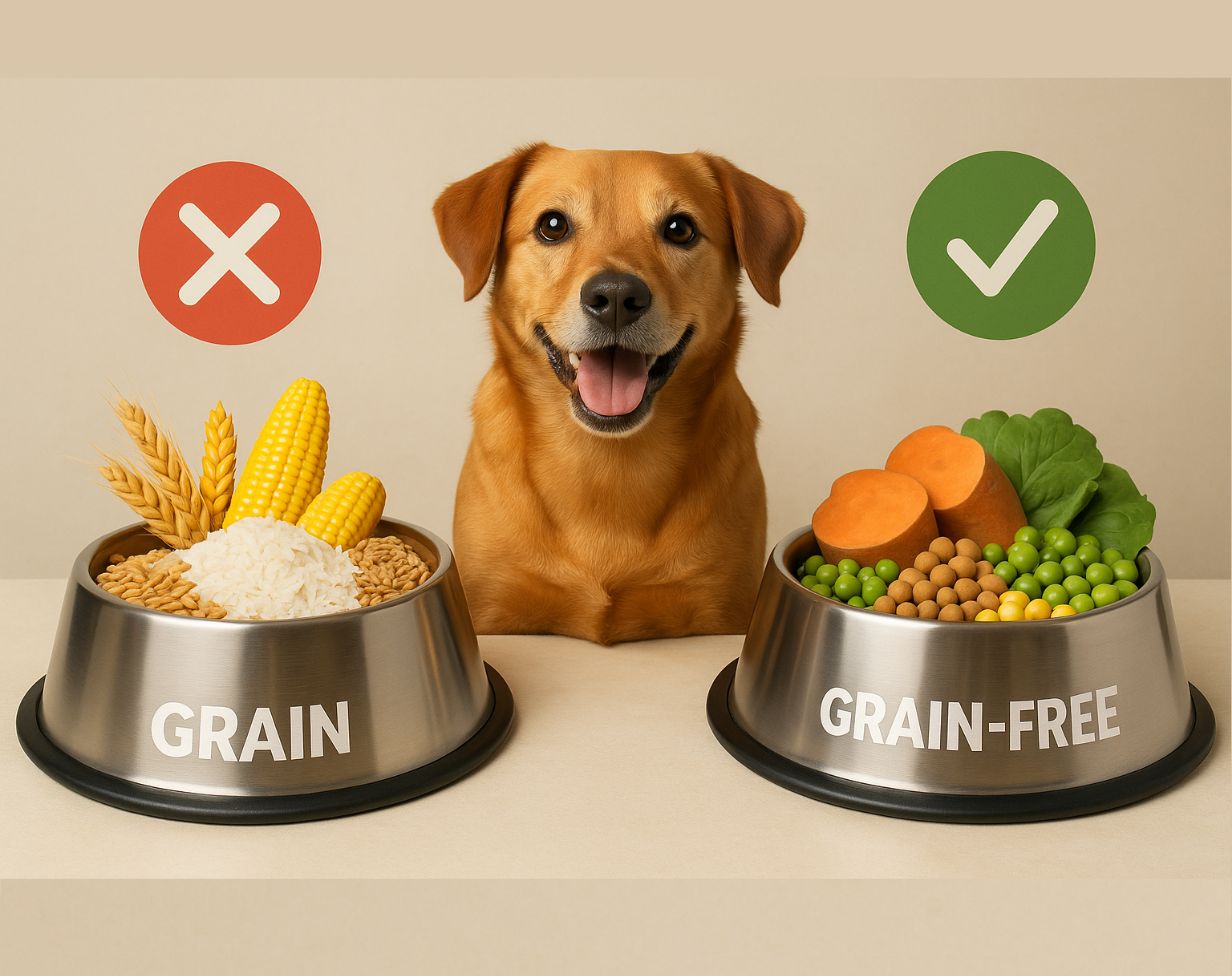
With loads of dog foods, diets, and treats available online, dog parents introduce online pet edibles to their dogs without vets’ recommendations. This introduction can invite unnoticed dog food allergies and tummy problems in dogs. That is why grain-free and gluten-free dog food matters. Most pet diets are made of popular grains, including wheat, barley, rye, rice, or corn.
As its name suggests, a grain-free dog food excludes all grains. Dogs with grain allergies can’t digest a grain-rich food. Contrary to it, a gluten-free dog food has no gluten-containing grains. A gluten-free diet targets gluten sensitivity. The use of both food types depends on the pet’s health, nutritional balance, and ingredients used.
This blog talks about grain and gluten sensitivity in dogs, signs of grain allergy in pets, benefits of grain-free dog food and gluten-free food, and the difference between the two food types.
What is Grain-Free Dog Food?
A grain-free dog diet cuts out all grains. It contains sweet potatoes, peas, or lentils. It suits dogs with grain allergies. Some vets warn that grain-free diets may be linked to heart issues (DCM).
What is Gluten-Free Dog Food?
A gluten-free dog food avoids gluten only in its composition. Gluten is a protein found in grains. It can contain rice or corn. Gluten sensitivity is also uncommon in dogs. So, this diet is recommended to dogs with a wheat or gluten allergy, confirmed by vets.
Both diets serve specific health needs. But you should use them as per your dog’s condition. Don’t get attracted to alluring ads; ask your vet before making a decision.
Can Canines Be Allergic to Gluten?
Yes! Some dogs can face gluten-induced issues. That is why gluten sensitivity in dogs is a serious concern. If they eat a gluten-rich diet, their tummy might hurt. They likely face issues of diarrhea. Pets may face issues of itching and fur falling. Certain dogs even have trouble moving well if they eat gluten.
Gluten-induced diseases in dogs
- Chronic digestive problems
- Chronic skin irritation and dermatitis
- Flatulence and bloating
- Gluten-induced neuromyopathy
- Growth retardation
- Nerve and muscle problems
- Nutrient malabsorption
- Paroxysmal gluten-sensitive dyskinesia
- Vomiting and diarrhea
- Weight loss and poor coat condition
Is Your Pet Allergic to Grains?
When it comes to detecting signs of grain allergy in dogs, your dog might:
- Scratch a lot because their skin is itchy
- Lose fur in certain spots
- Get ear infections a lot
- Lick or chew their paws a LOT
- Have an upset stomach
If you detect any such sign of uneasiness in your pet, your dog might have a grain allergy.
Grain-induced diseases in dogs
- Atopic-like dermatitis
- Chronic ear infections
- Chronic skin allergies
- DCM and gastrointestinal problems
- Gluten sensitivity
- Grain allergy
- Taurine deficiency
- Wheat-sensitive enteropathy
Why Pick Grain-Free Dog Food?
Before picking grain-free food, you should look at the benefits of grain-free dog food.
- Easier on dogs that don’t like grain
- Can make their skin and fur healthier
- Gives good energy from different ingredients
- Usually made with better, healthier stuff
- Helps dogs who get sick from grains feel better
Why Choose Gluten-Free Dog Food?
The benefits of grain-free dog food help you know why you should use this food type.
- Good for dogs who can’t handle gluten protein
- Helps stop tummy aches and skin problems
- Keeps their coat shiny and healthy
- Supports overall health with good nutrition
- Needed if a vet says your dog can’t have gluten
Grain-free vs. Gluten-free Dog Food
The difference between grain-free and gluten-free diets for dogs helps dog lovers clear their confusion about both food types.
| Feature | Grain-Free Dog Food | Gluten-Free Dog Food |
| Definition | Excludes all grains | Excludes only gluten protein |
| Contains | No wheat, rice, corn, oat | rice or corn |
| Carbohydrate | Sweet potatoes, peas, lentils, tapioca | Rice, corn, potatoes, millet |
| Targeted For | Sensitive and allergic dogs | Dogs with gluten intolerance |
| Used In | Boutique or premium foods | Specialized formulas for sensitive stomachs |
| Vet Recommended? | Sometimes | Yes |
| Nutritional Balance Risk | Medium | Low |
| Popularity | High | Moderate |
| Price Range | High | Moderate to high |
Veterinarian Insights on Grain‑Free Dog Food
“Medically speaking, it is very rare for a dog to require a grain‑free diet.” – Dr. Christopher Lea, AUCVM.
“Removal of grain-free diets and supplementation has shown improvement in affected dogs.” – ASPCA.
PetMD emphasizes that grain-free diets should be used if a vet confirms a medical need.
Conclusion
Good dog food keeps pets happy, energetic, and healthy. Vet consultancy is a must before introducing grain- and gluten-free diets to pets.
FAQs about Grain-Free and Gluten-Free Diets for Dogs
Q1. Is grain-free the same as gluten-free for dogs?
Ans. No. Both are different in terms of grain and gluten usage. Grain-free diets avoid grains. Gluten-free diets possess no protein. But they have rice and corn.
Q2. Can a dog be gluten-sensitive but not grain-sensitive?
Ans. Yes. It is possible that a canine can be reactive to gluten, not grain. Ask your pet to check gluten or grain sensitivity.
Q3. What are the signs of grain or gluten intolerance in dogs?
Ans. Itching and infection issues should be checked properly. Stomach issues in pets also need your attention. Primarily, vomiting and diarrhea signs help you know food intolerance in pets.
Q4. When should a dog eat gluten-free food versus grain-free?
Ans. Feed pets with gluten-free foods if they have gluten sensitivity. A grain-free diet will suit the pet having grain allergies. Ask your vet for a better diet chart.